Cocka-A Robot that converses through singing
A design intervention to equip high school students with psychological resilisence
by encouraging expression and accompanying students in their development years.
Companion Robot
·
Persuasive Design
·
Positive Psychology
✍Overview
High school students are losing their psychological resilience.
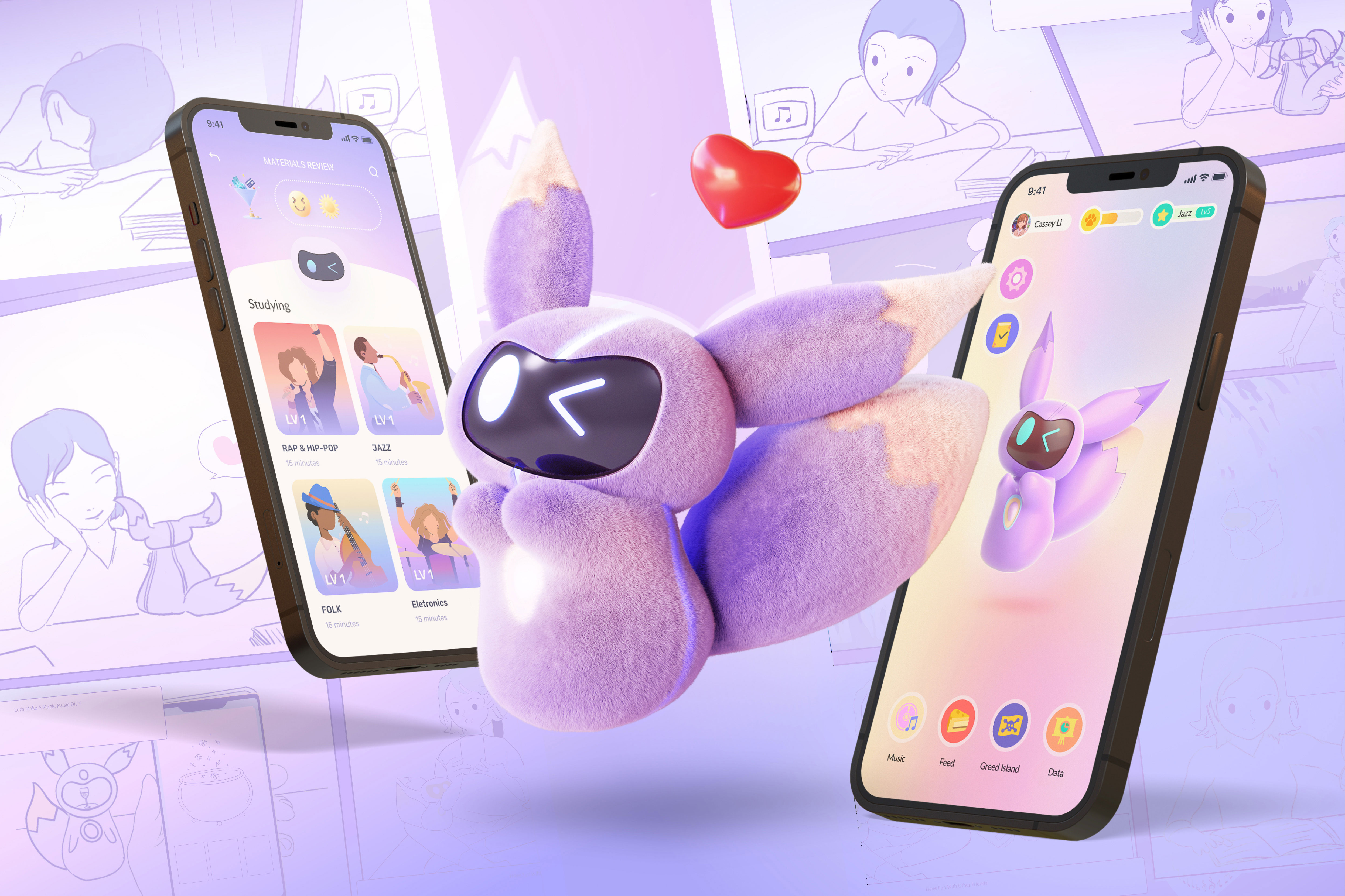
Cocka is a conversational singing robot designed to help overwhelmed lonely students get through their developmental years and equip them with resilience.
Cocka enables them to face loneliness positively by guiding them to improve poor mental habits (mainly suppression of expression).
-
Timeline:
Apr,2022-June,2022
8 weeks
My Role:
Individual Project
Tools:
Arduino、Figma、Rhino、Cinema 4D
📈Background
We live in era of uncertainty and change. Powerful psychological resilience
could help us recover from negative experiences and flexibly adapt to changing circumstances.
I noted loneliness among the related concepts to make the topic more focused.
Loneliness is not only among the negative experiences, but also about individual's self-perception.
Desk Research
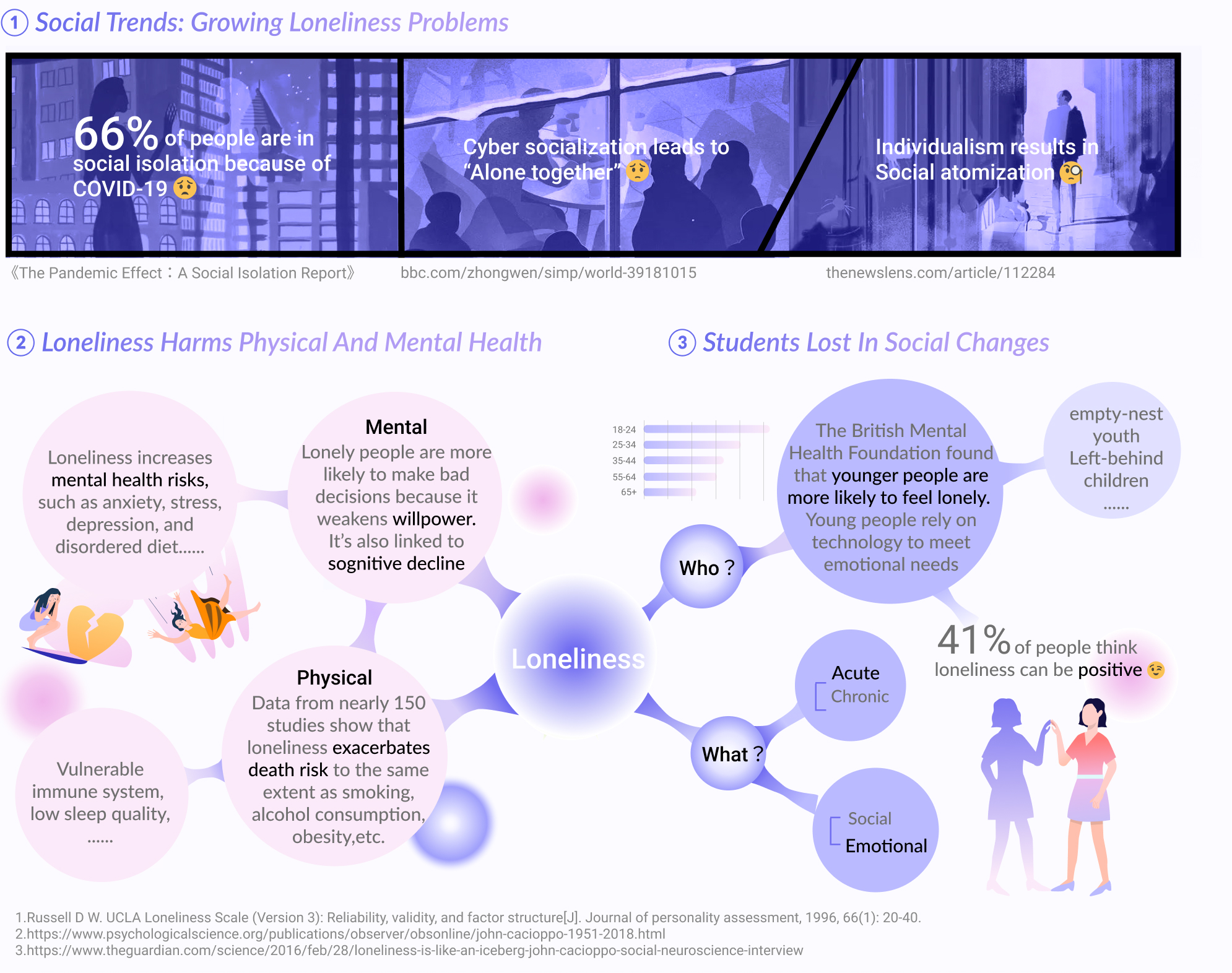
Professional evidence
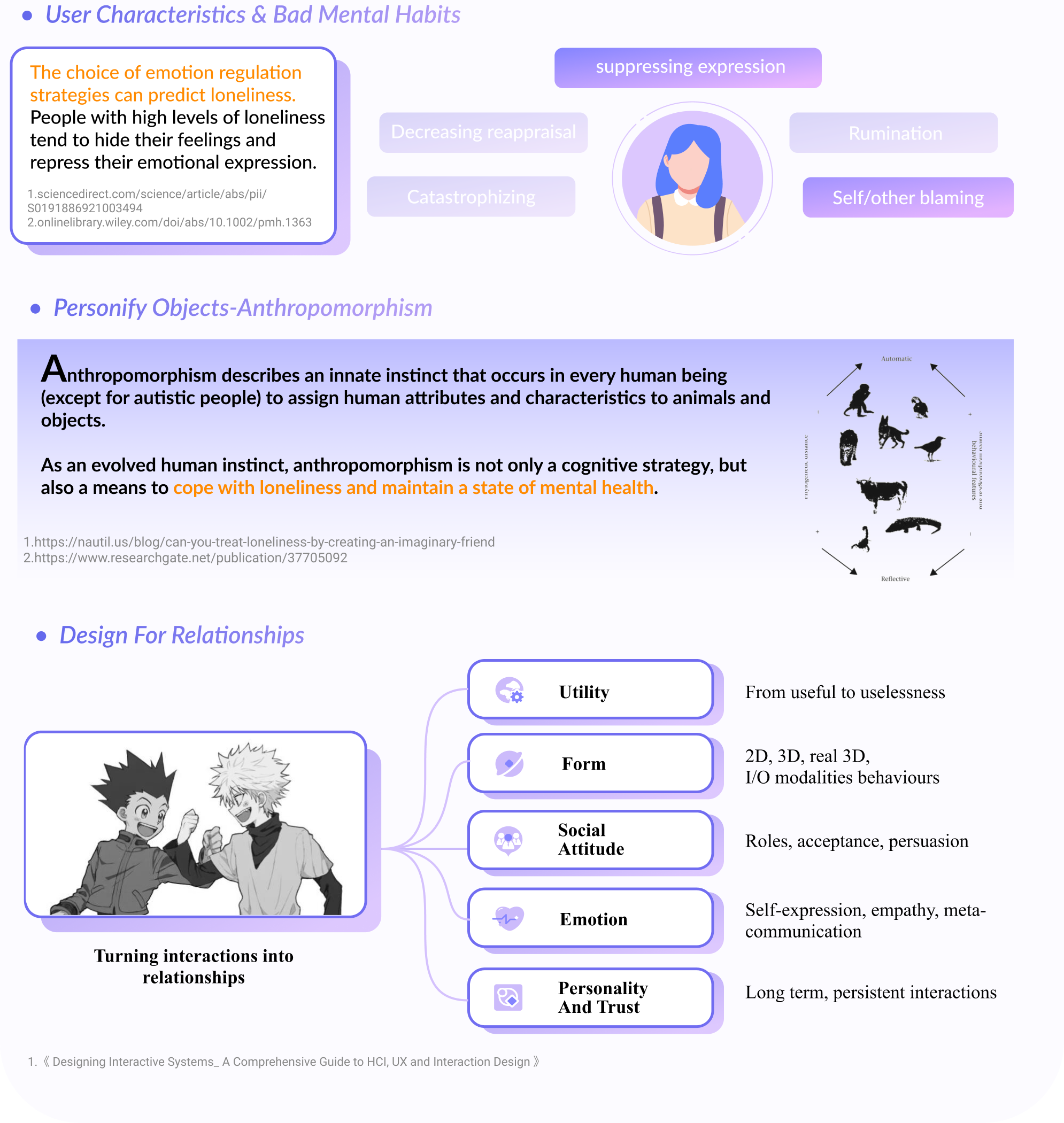
📌Problem Define
How to design intelligent companions to help students change bad mental habits (mainly suppressing expression) and get through the development period?
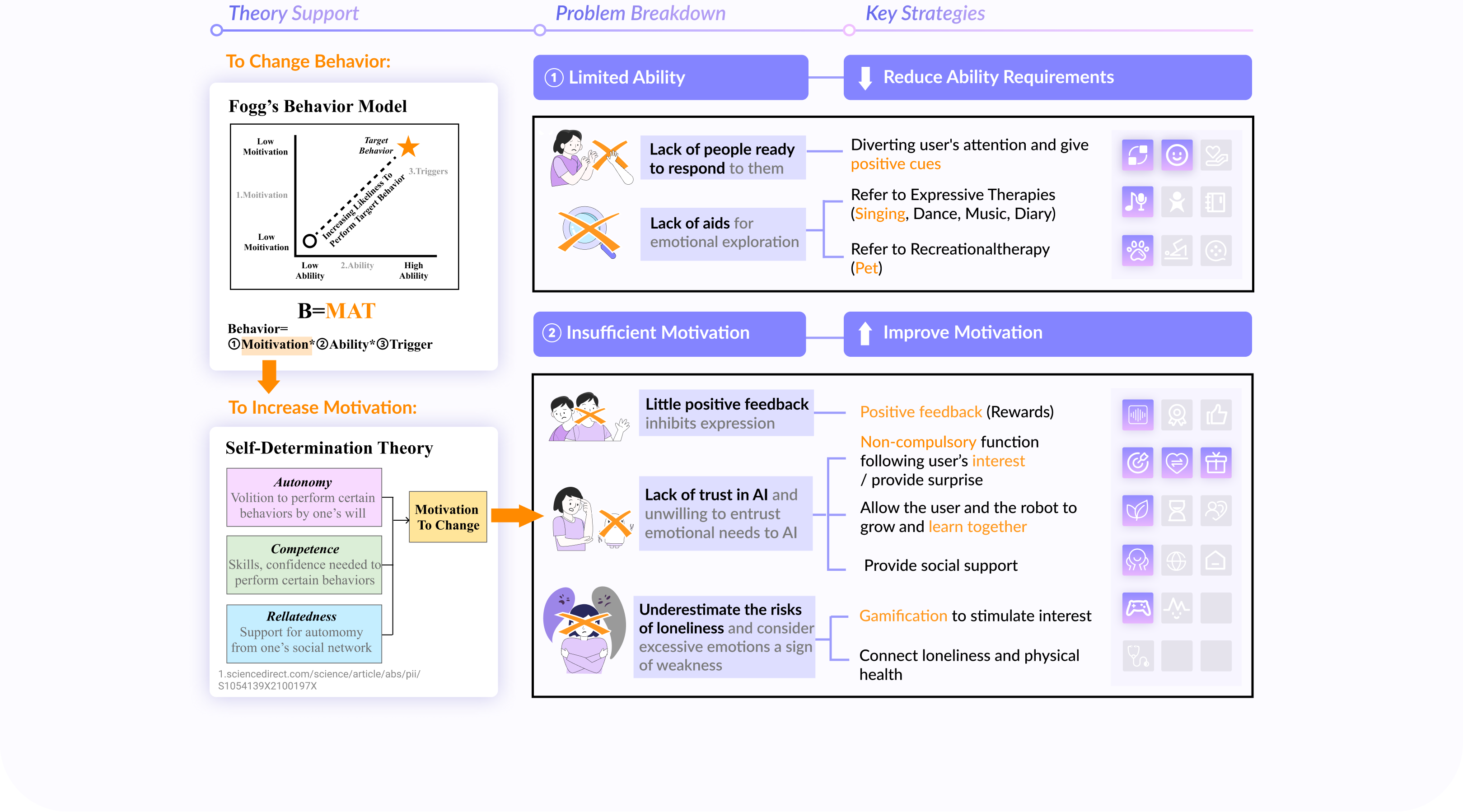
📖Theory & Strategy
I used some psychological theories to break down the problem and develop some design strategies.
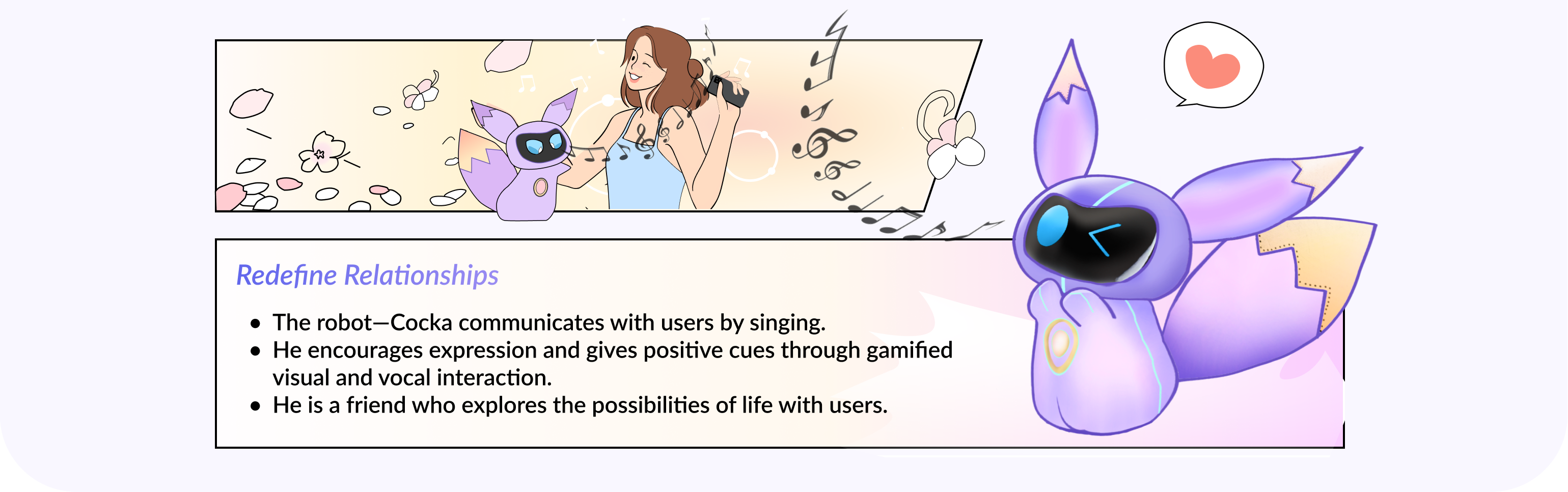
Design Assumption
Based on the abstract design strategies, I visualized them to my design assumptions.
User Research
After I obtained the theoretical preconceptions and design assumptions,
I conducted user research to derive deeper insights and validate my design assumptions.
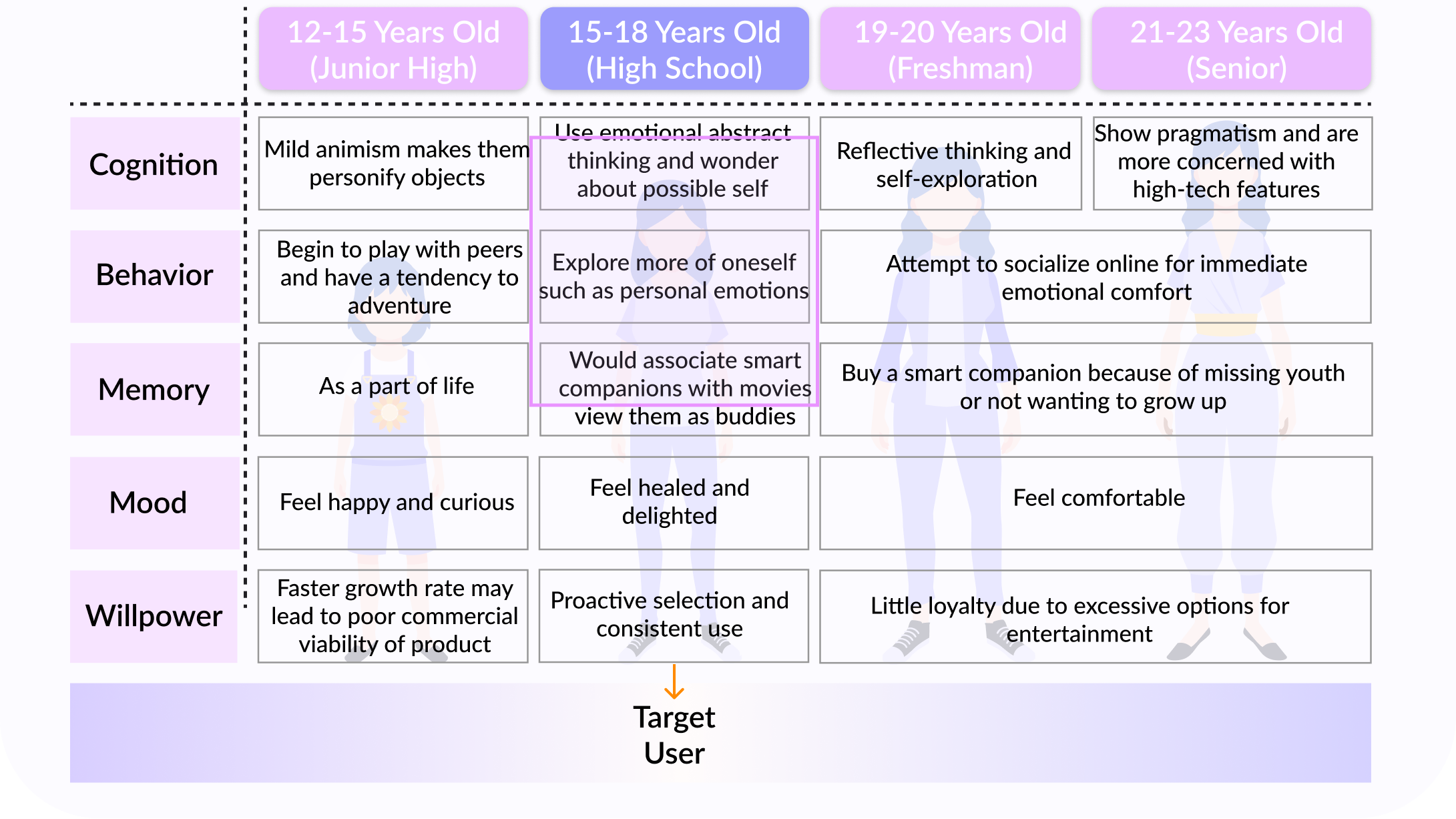
User segmentation
Observations
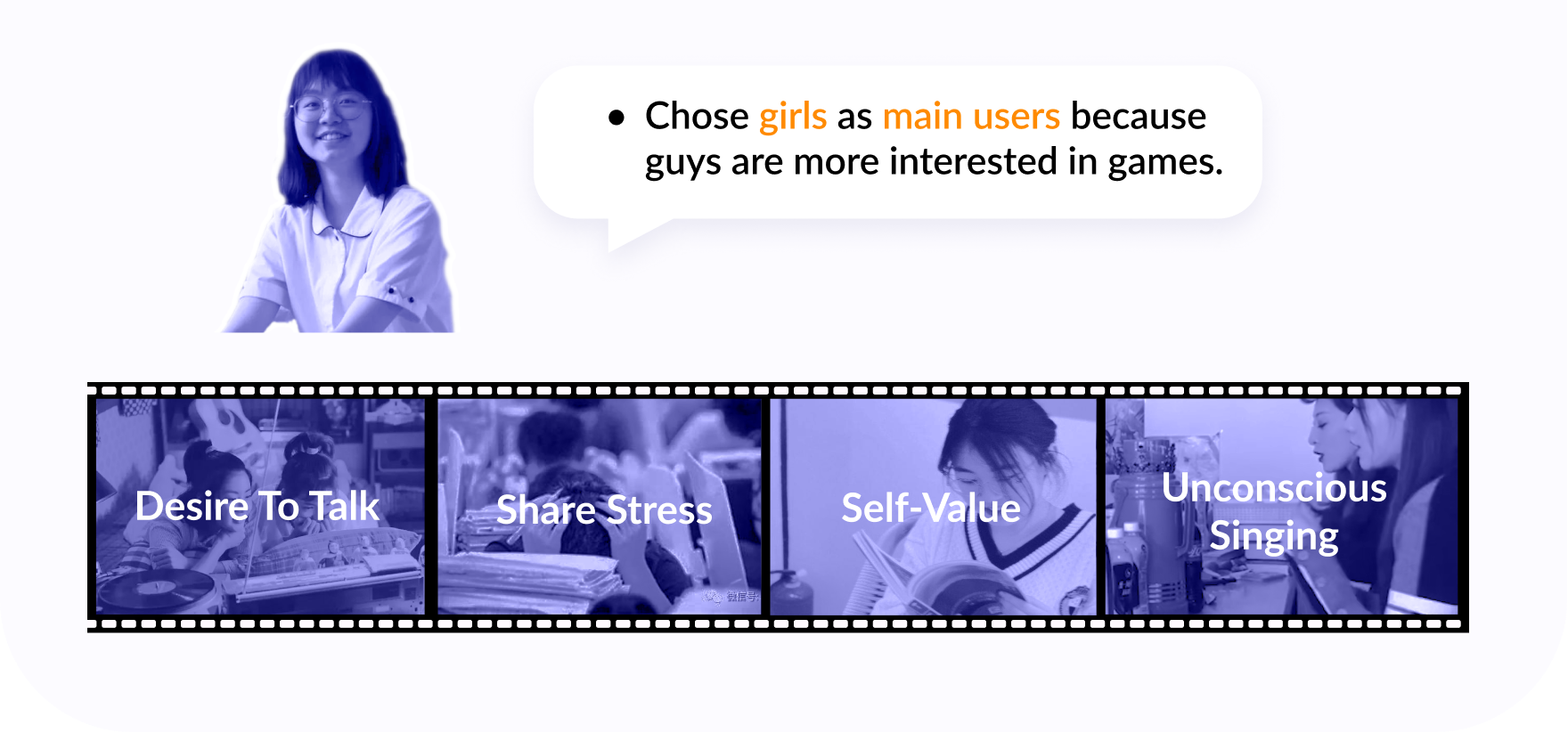
Obesrvation experiments were used to understand users' behaviors.
Since which scenarios would fit the project remains unknown, users' repression and singing behaviors were also observed.
Interviews
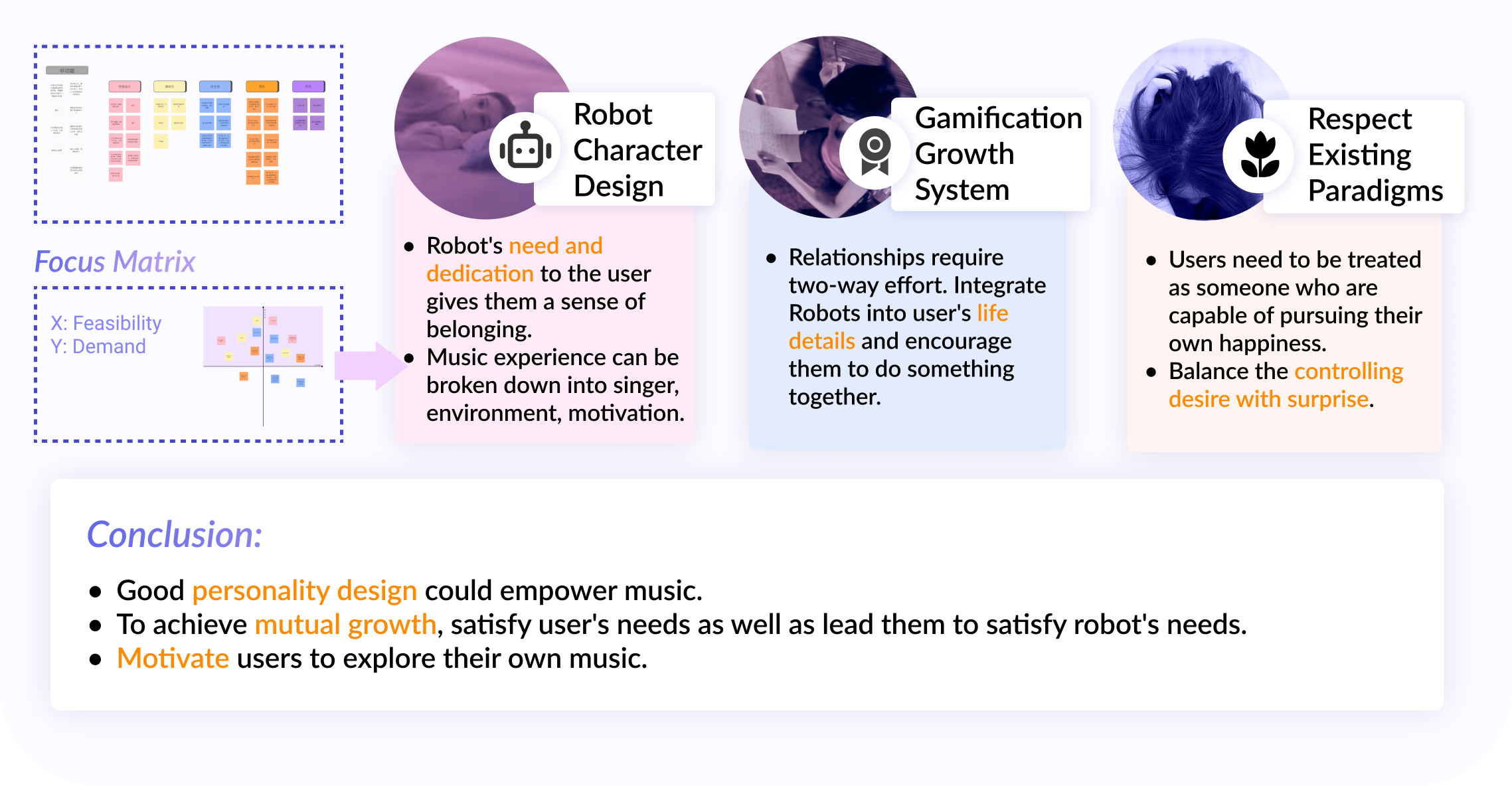
Interviews were then conducted to understand the user's needs for the robot.
I used card sorting to cluster the users' views and extracted three main ideas.
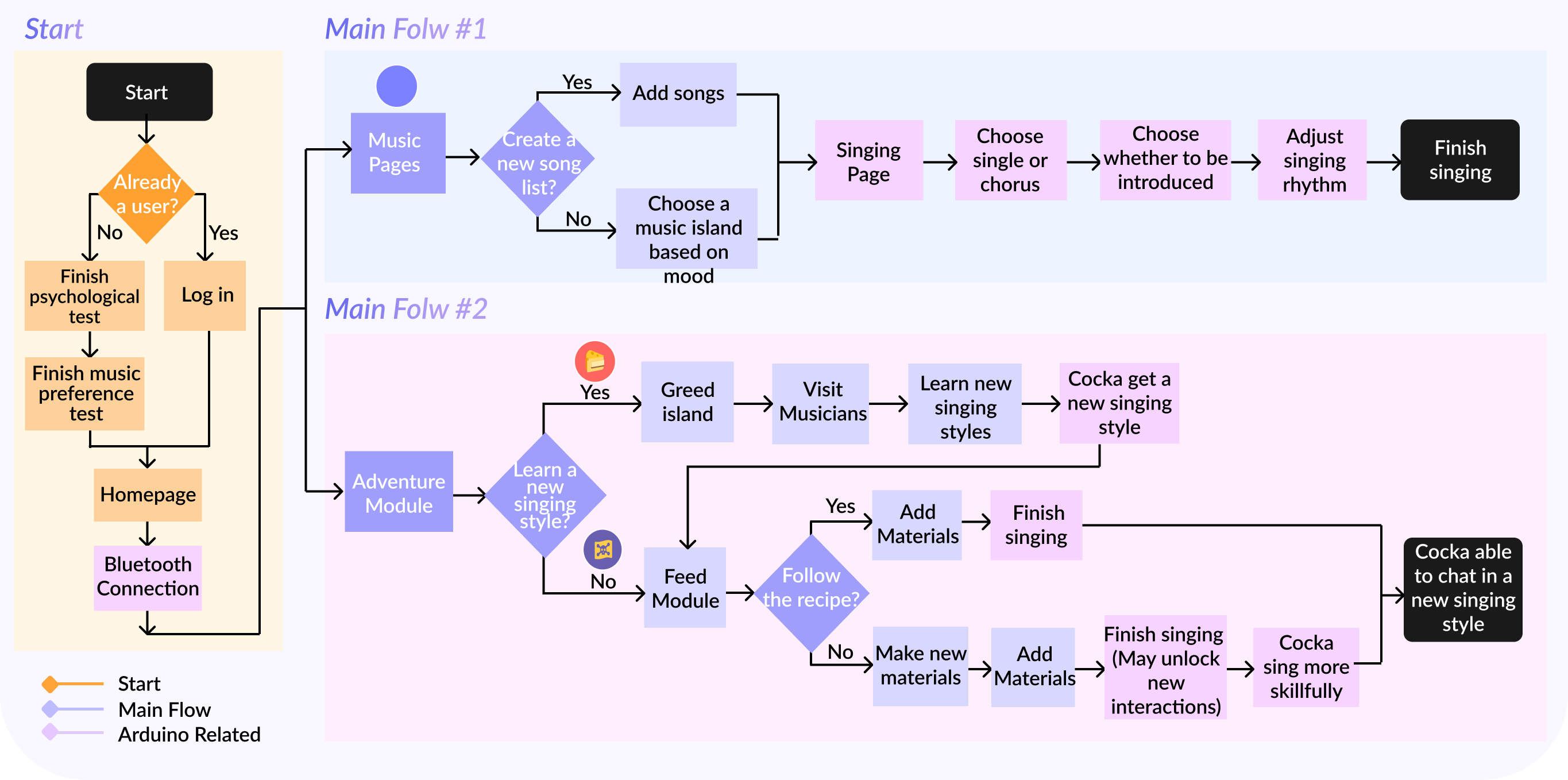
Interaction Flow
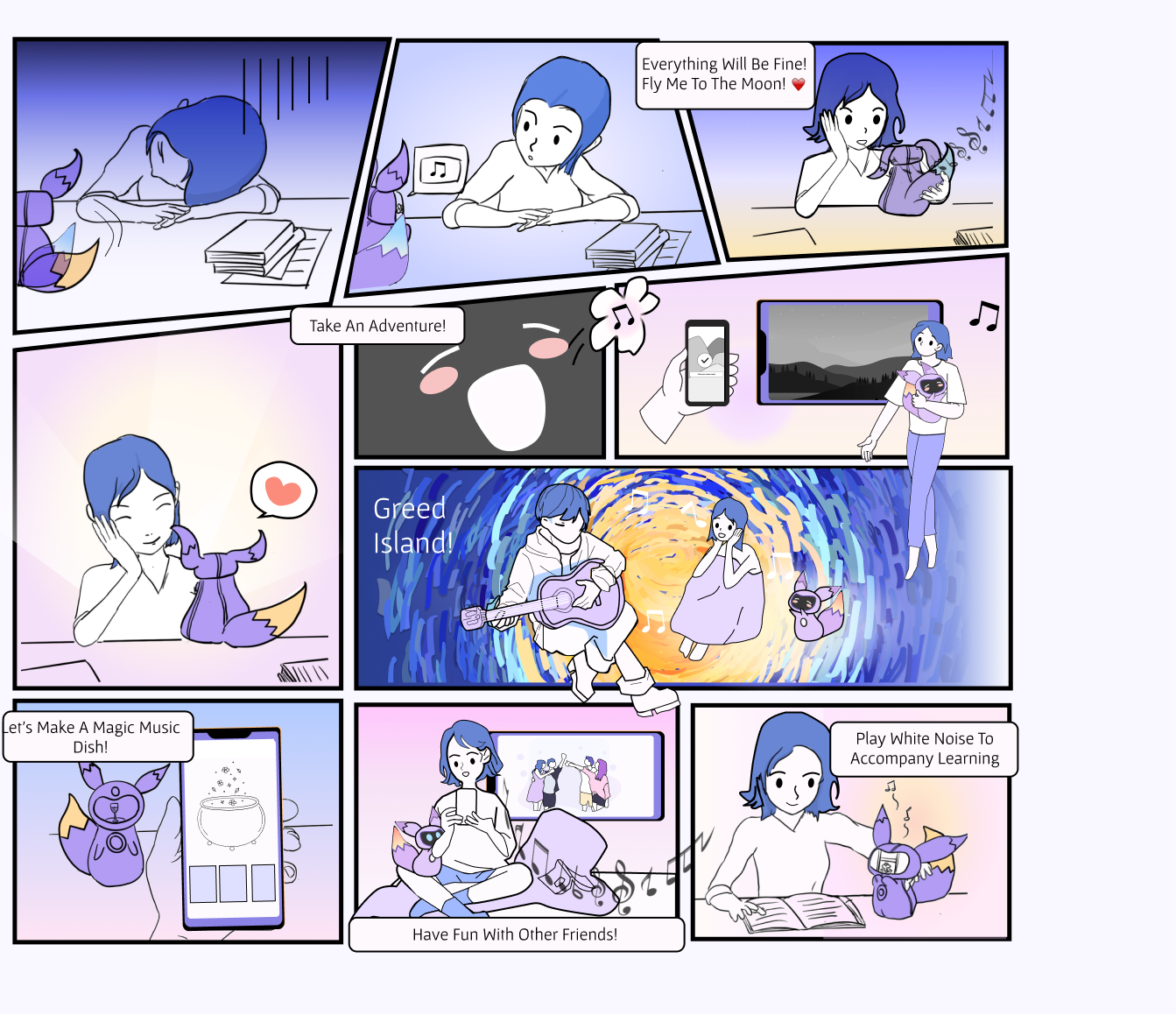
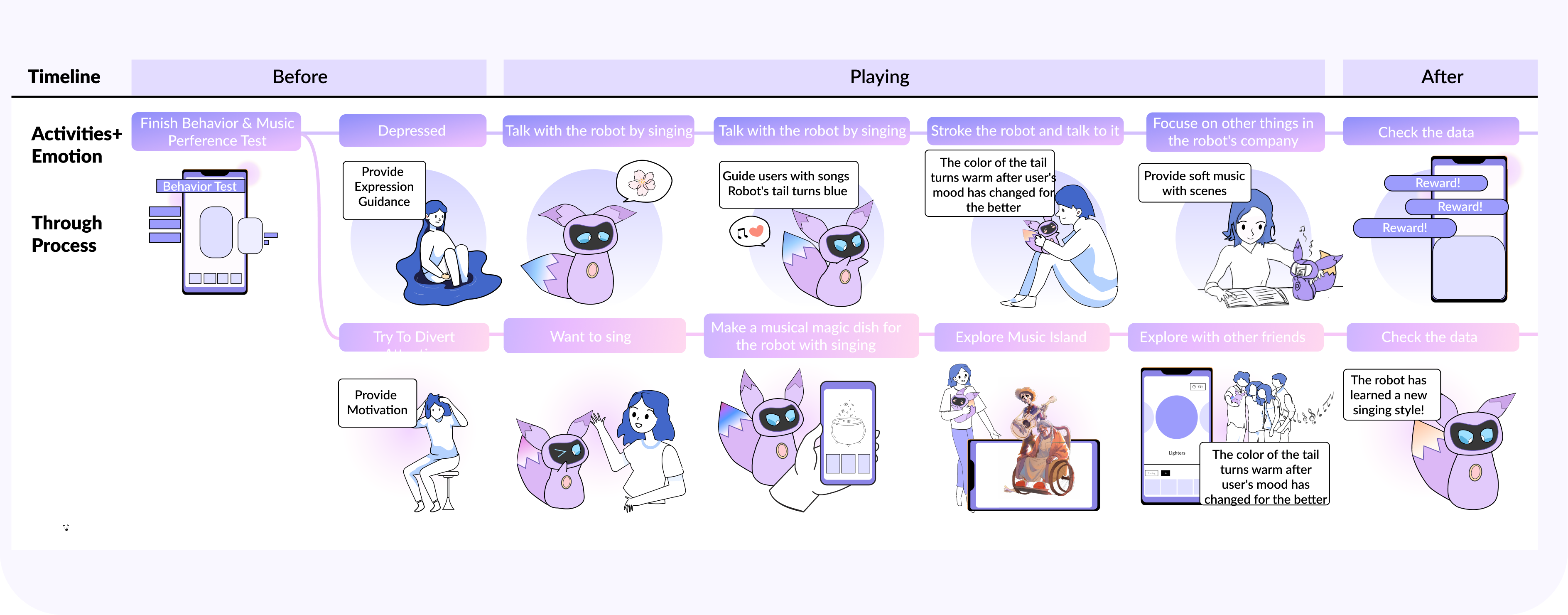
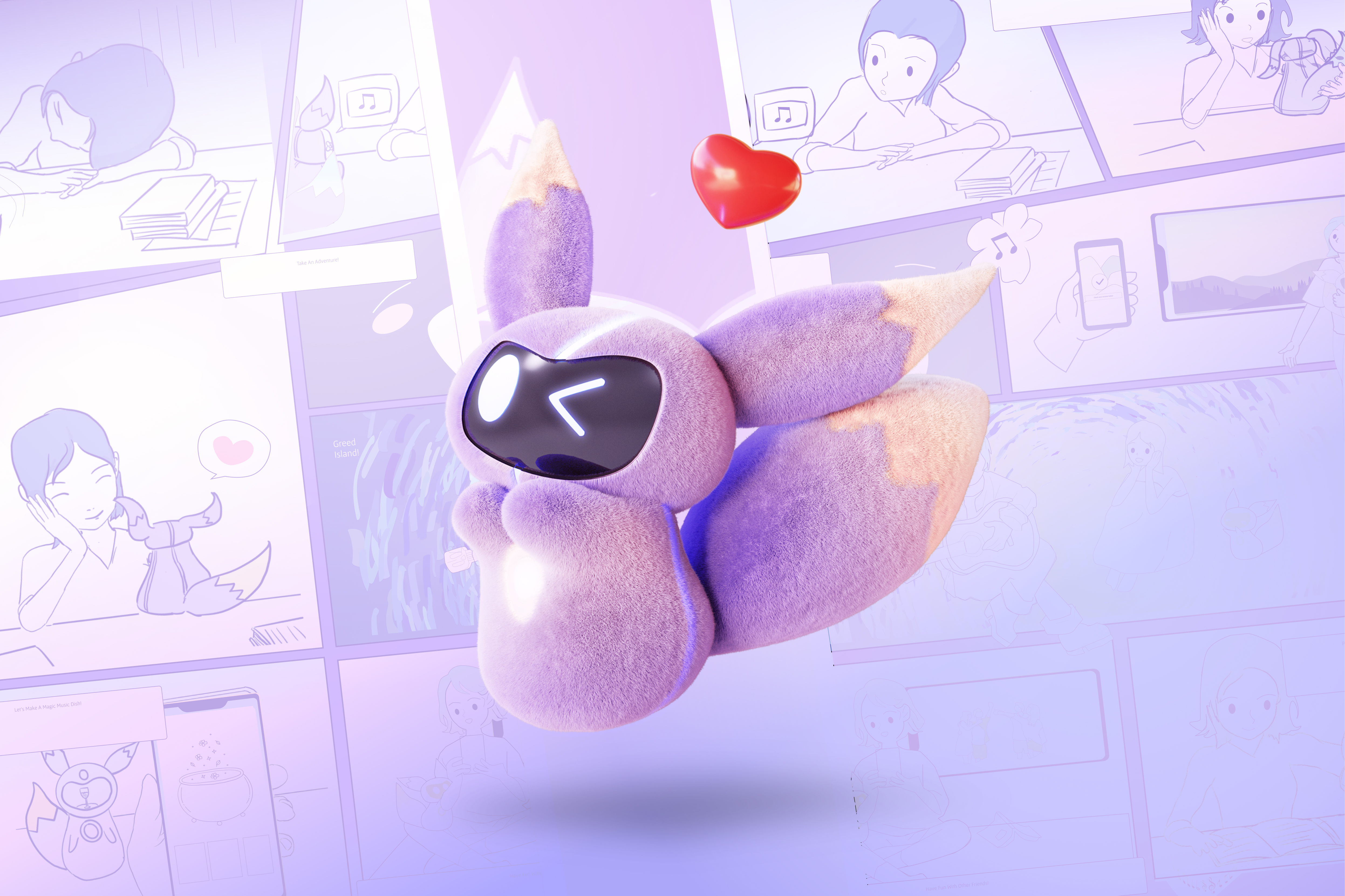
I used the storyboard to better show user's emotional changes, and illustrate the flow with journey map.
Storyboard
I took the depression scenario as an example.
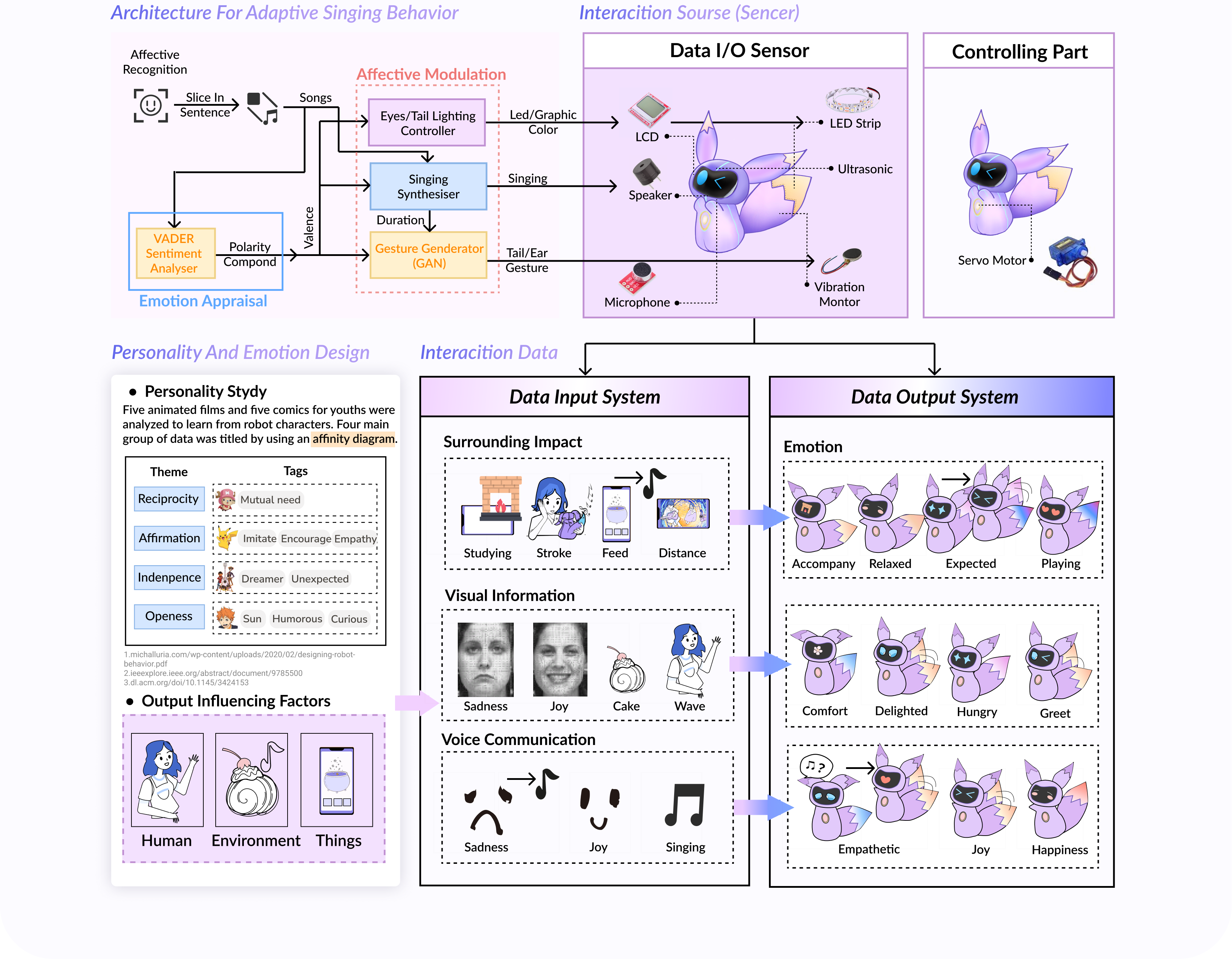
Input & Output
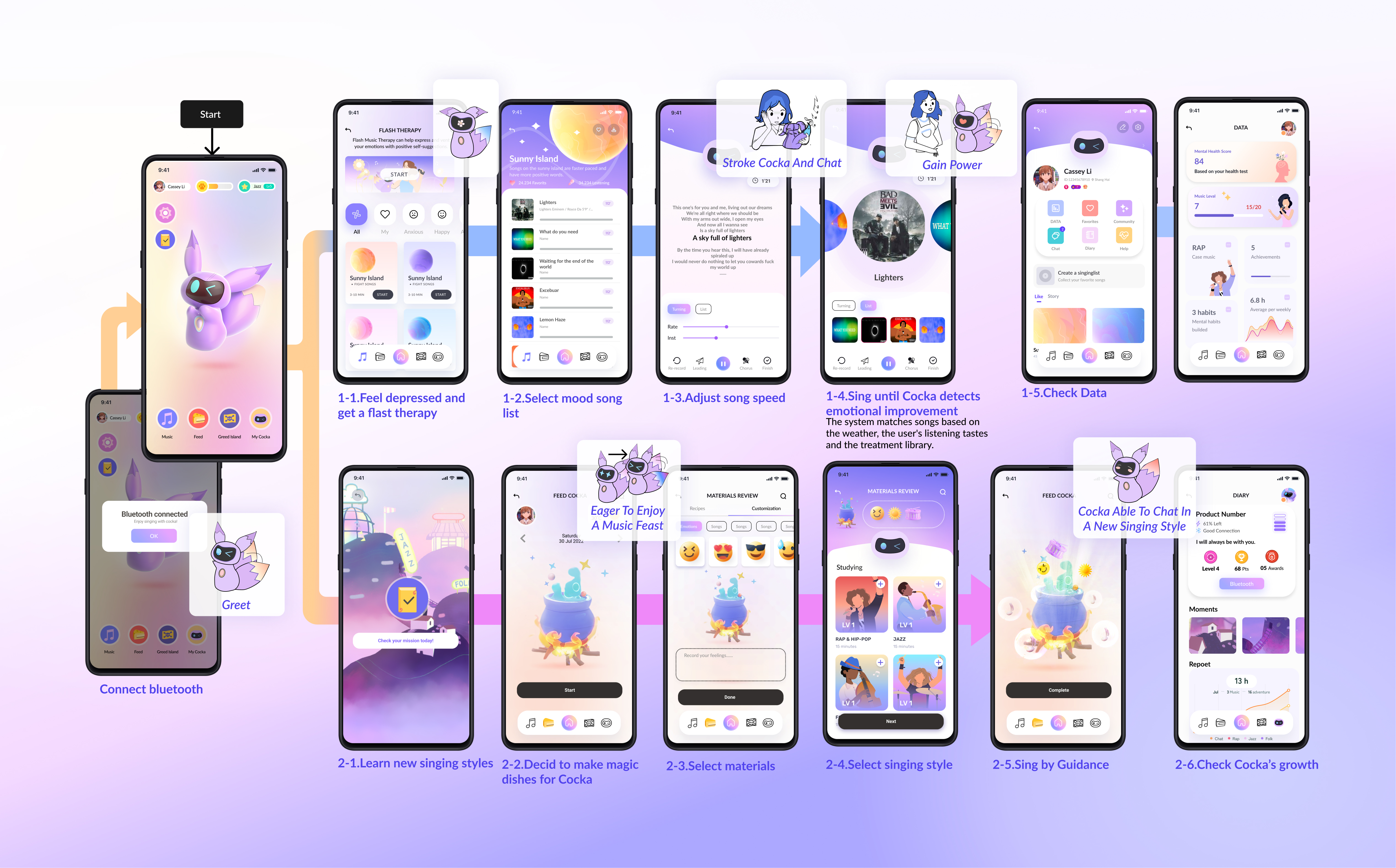
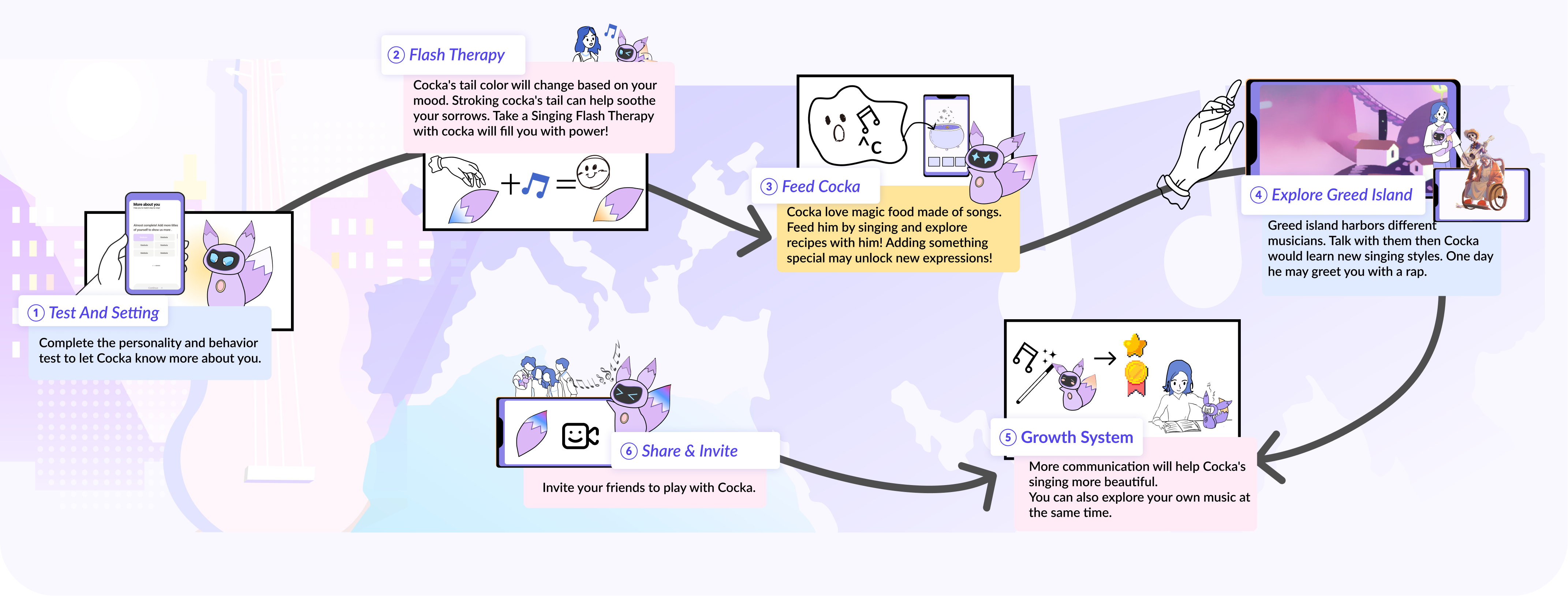
How To Play
I continue to design the specific process of using the product.
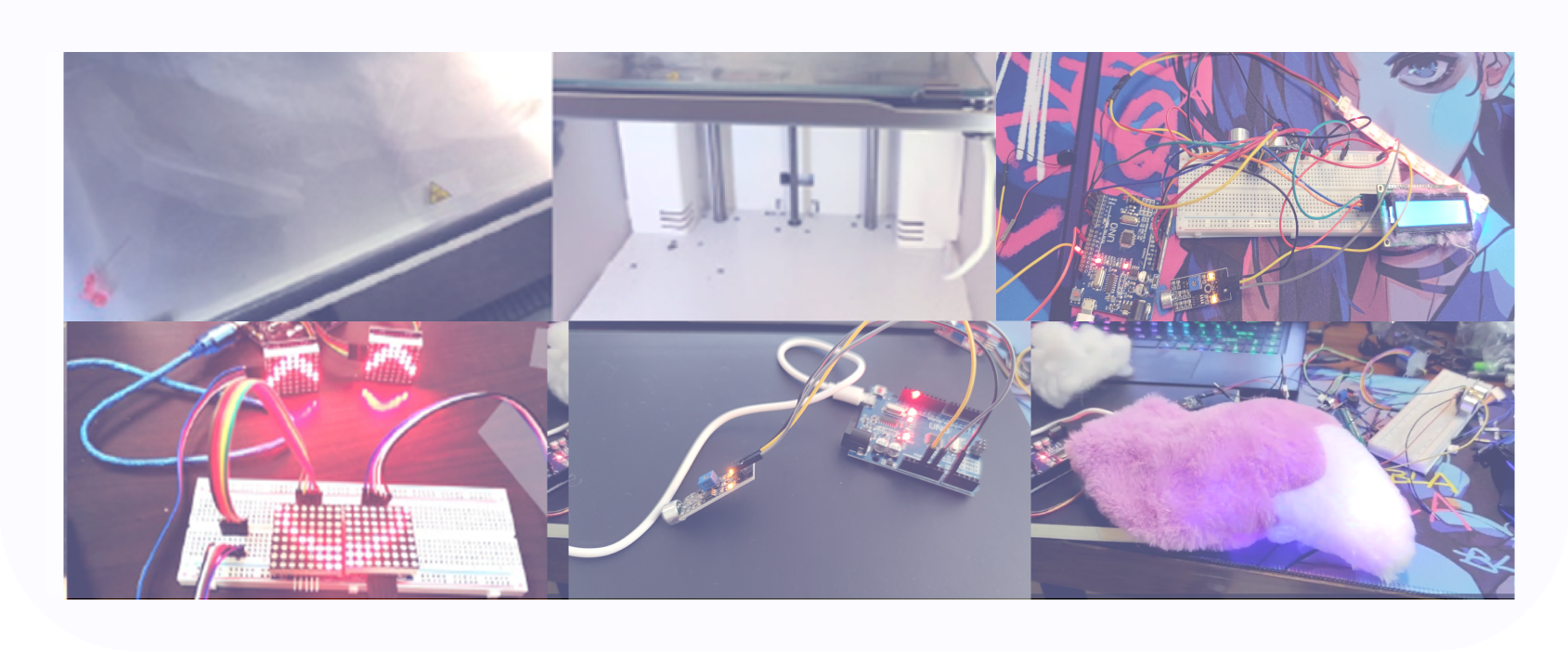
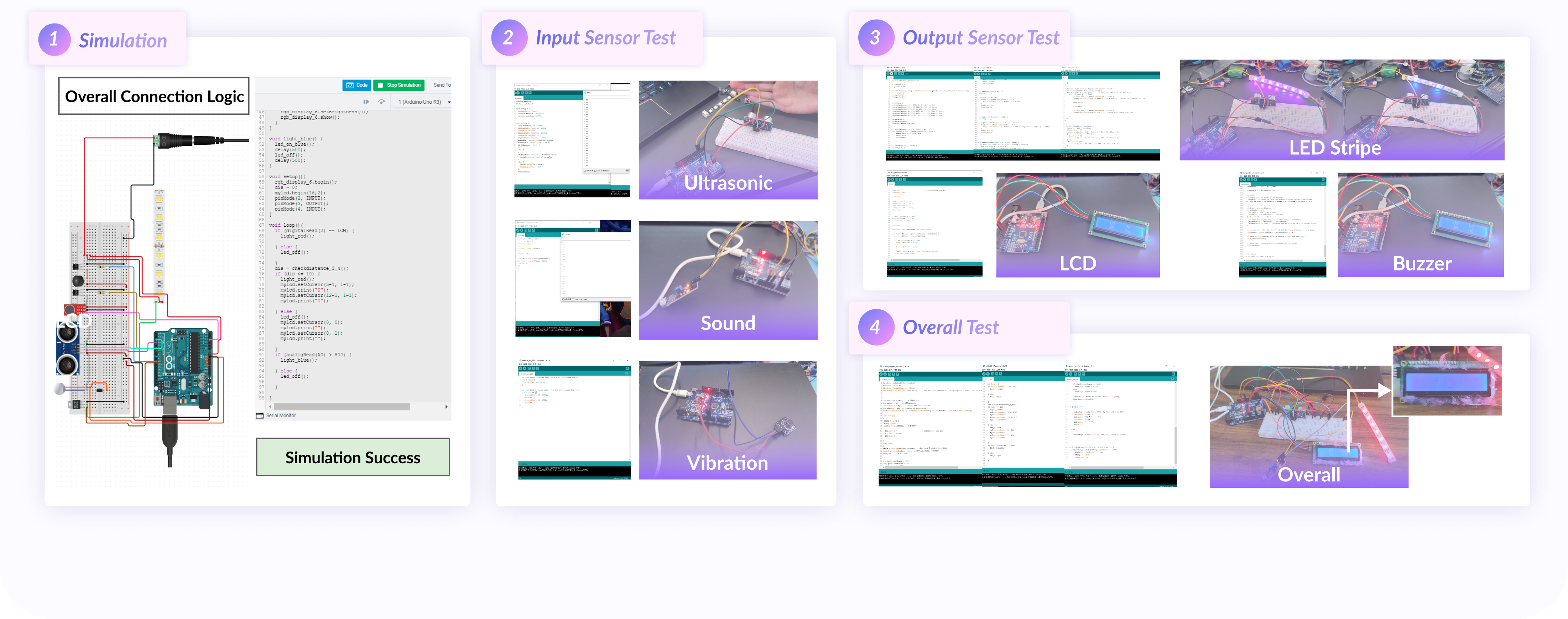
Arduino Demo
Reconstruction
Ergonomics Analysis
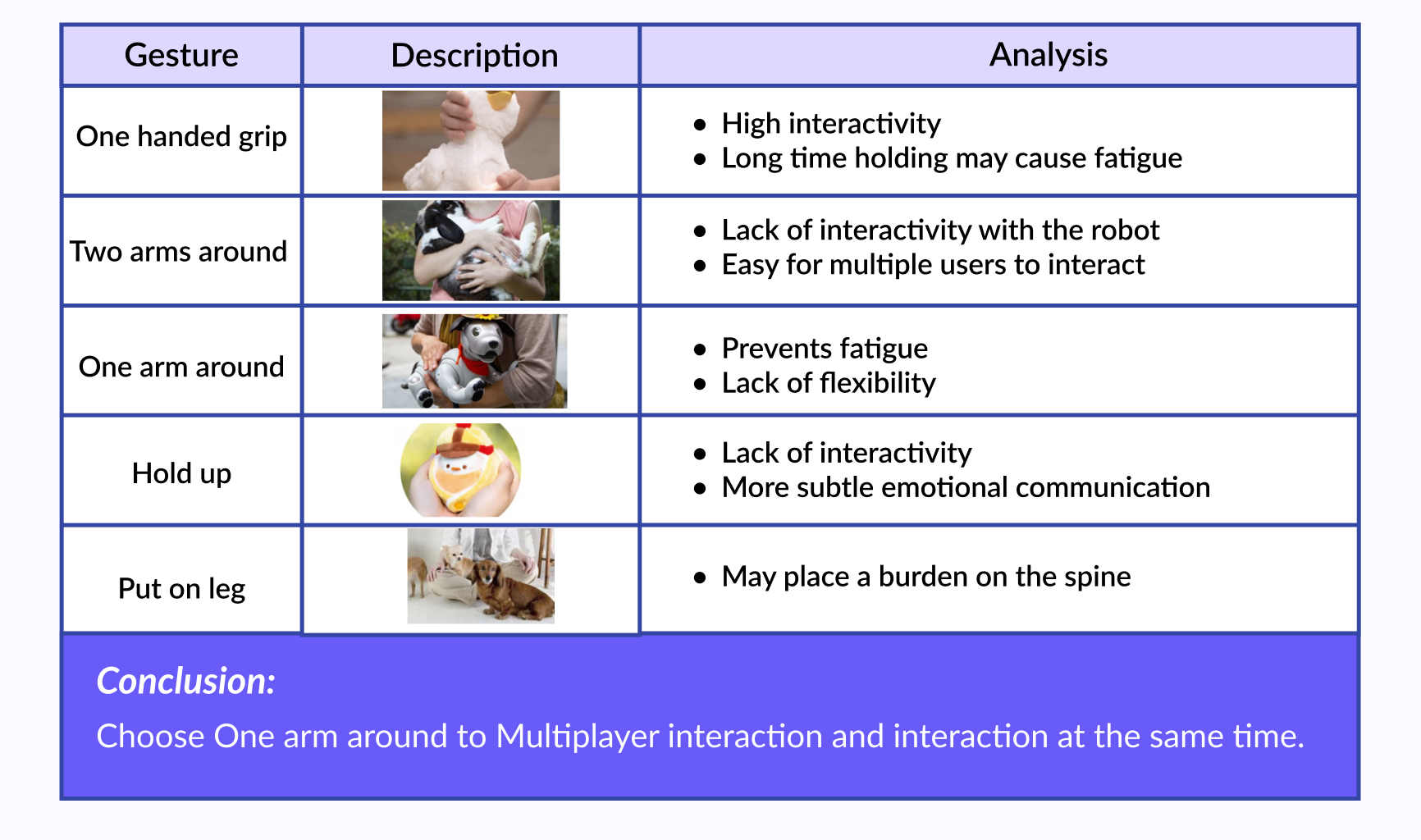
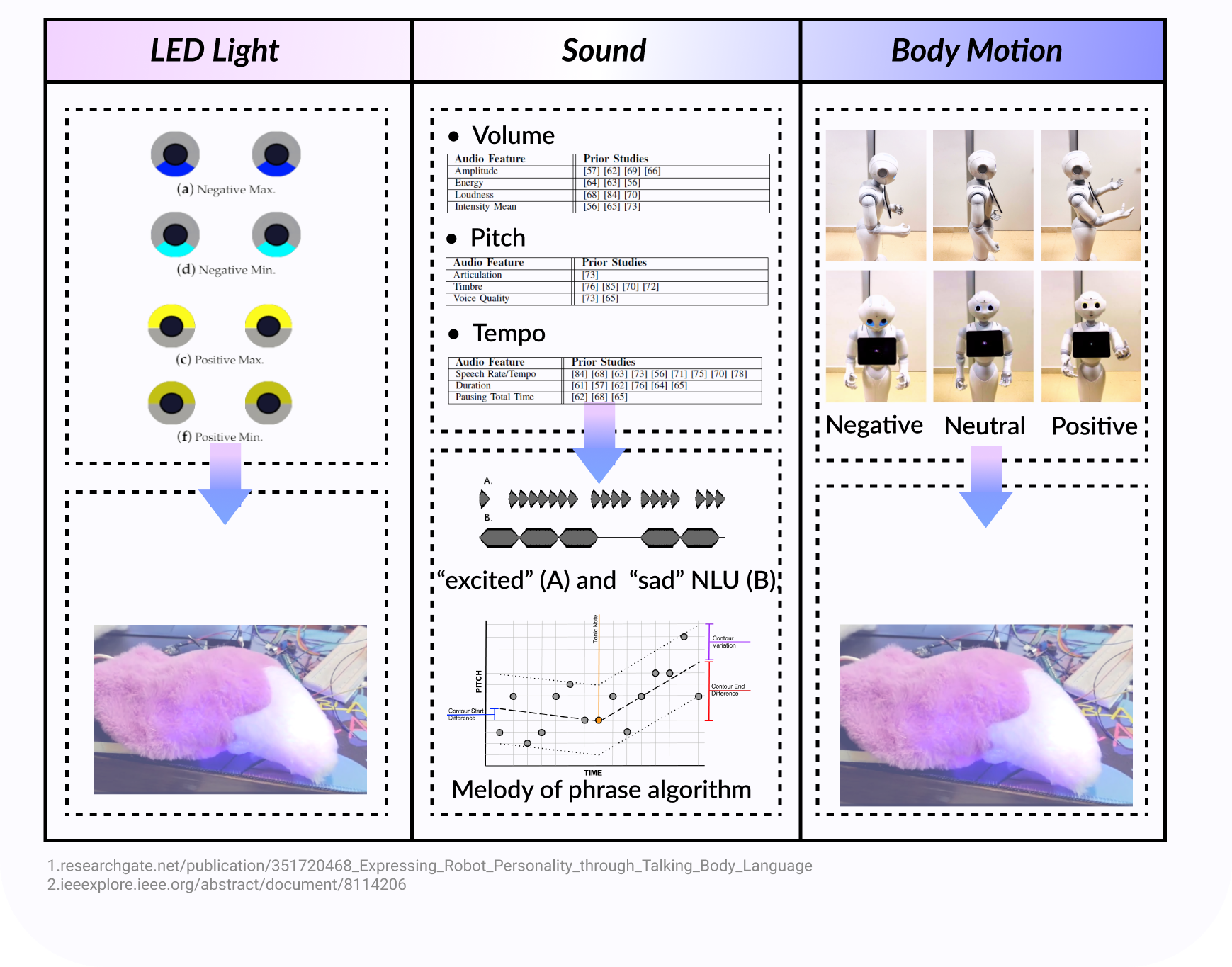
Deconstruction of output data
Analyze human facial expression
and voice intonation to refine the robot's Light-Sound-Motion output system.

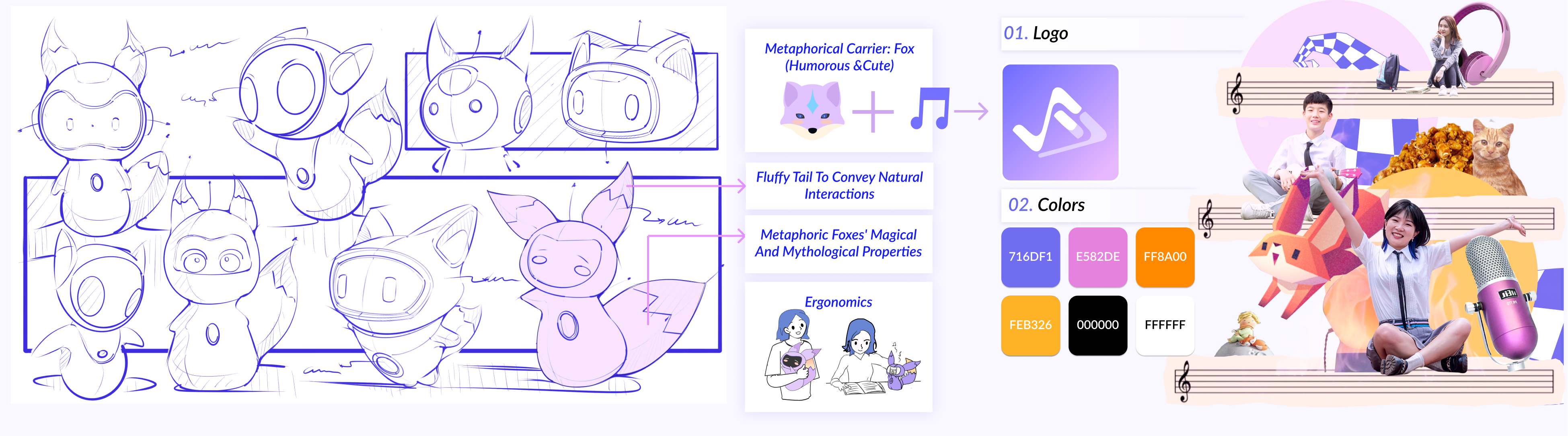
Product Design
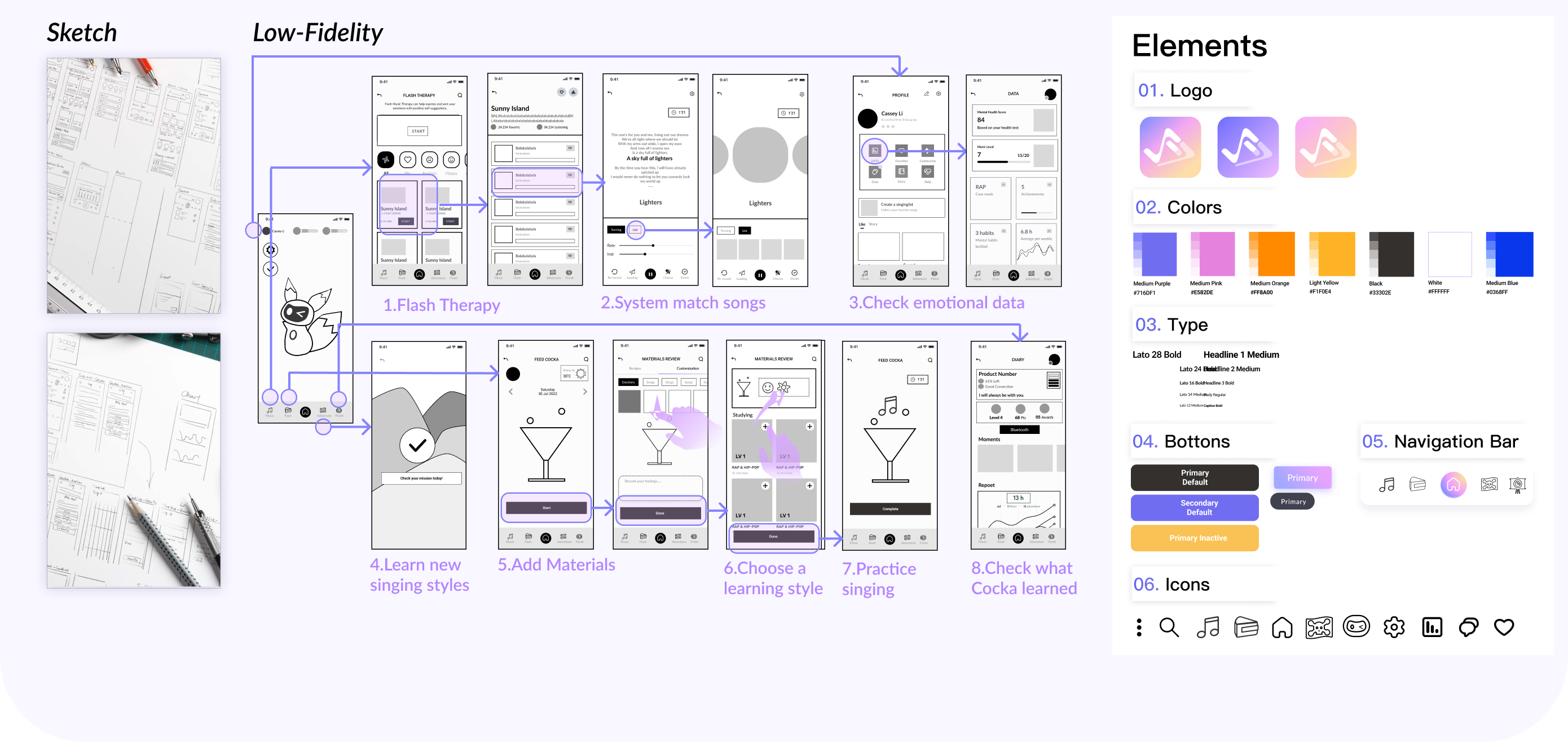
Sketch
I draw some characters and shapes to determine the final shape of the robot.I also made a moodboard to determine the tone of the product.
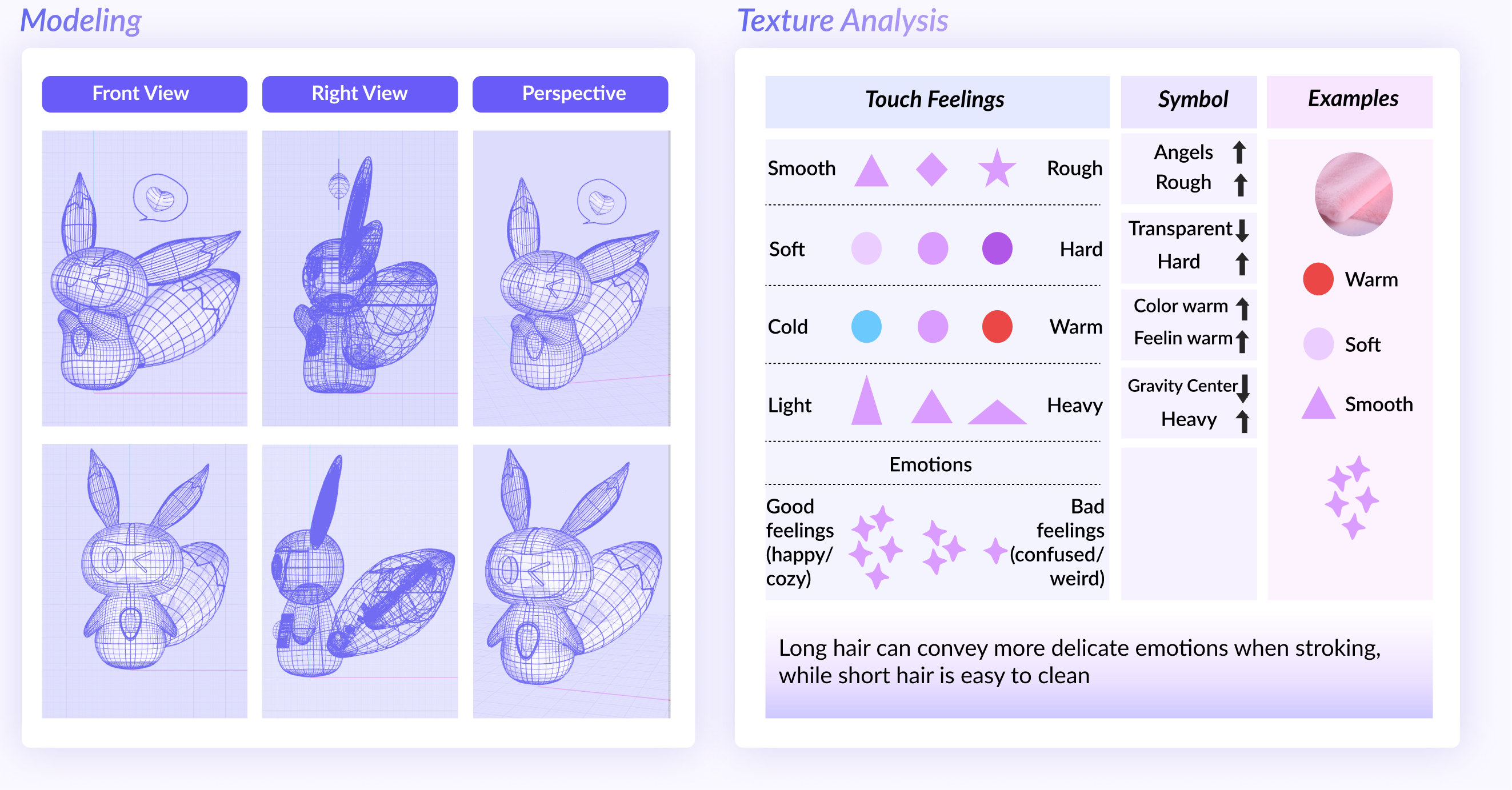
Modeling & Rendering
I also made reconstruction of different material and texture by symbols with consideration of user's feeelings.
Testing & Iteration#1
Conclusion:
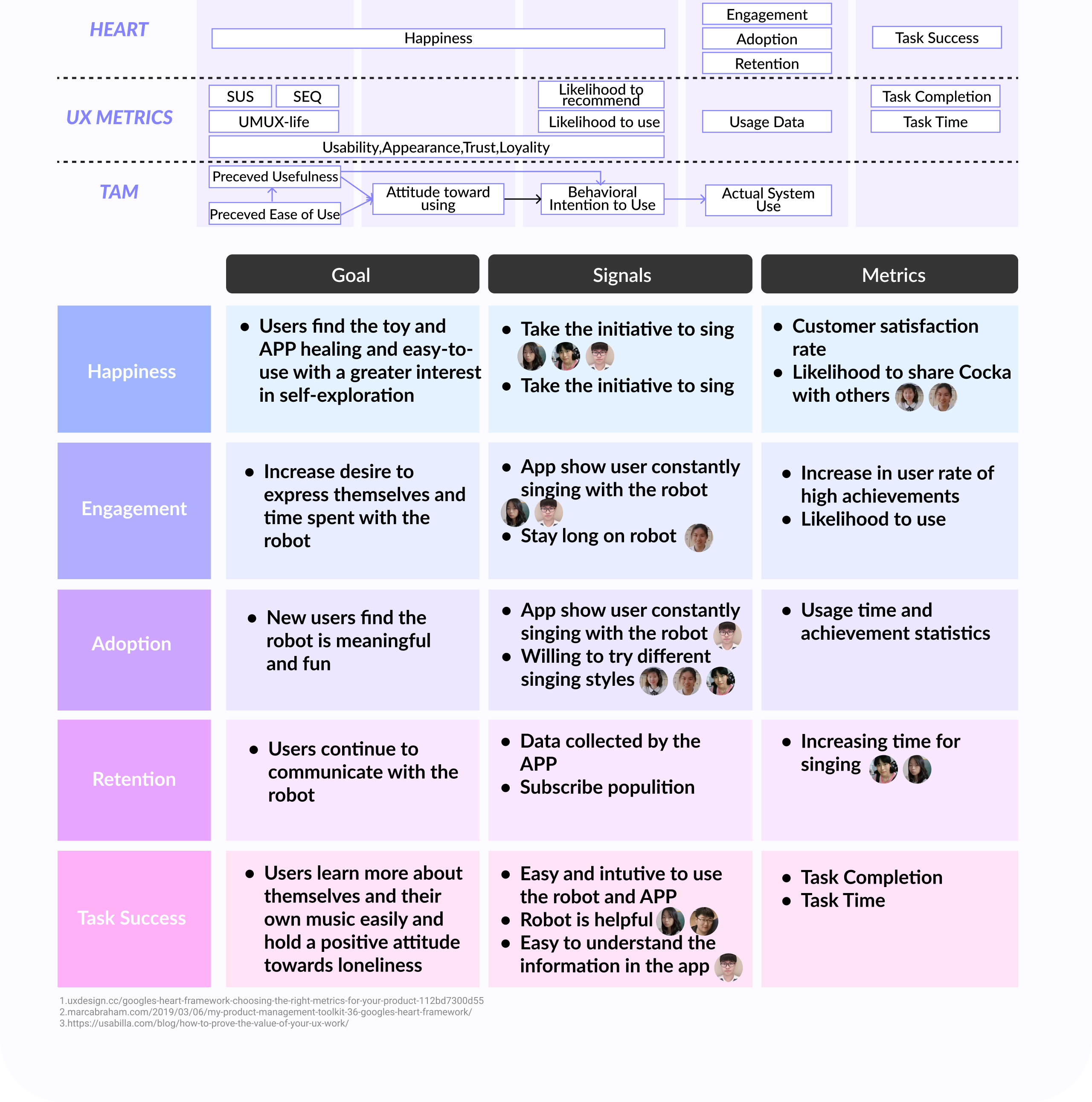
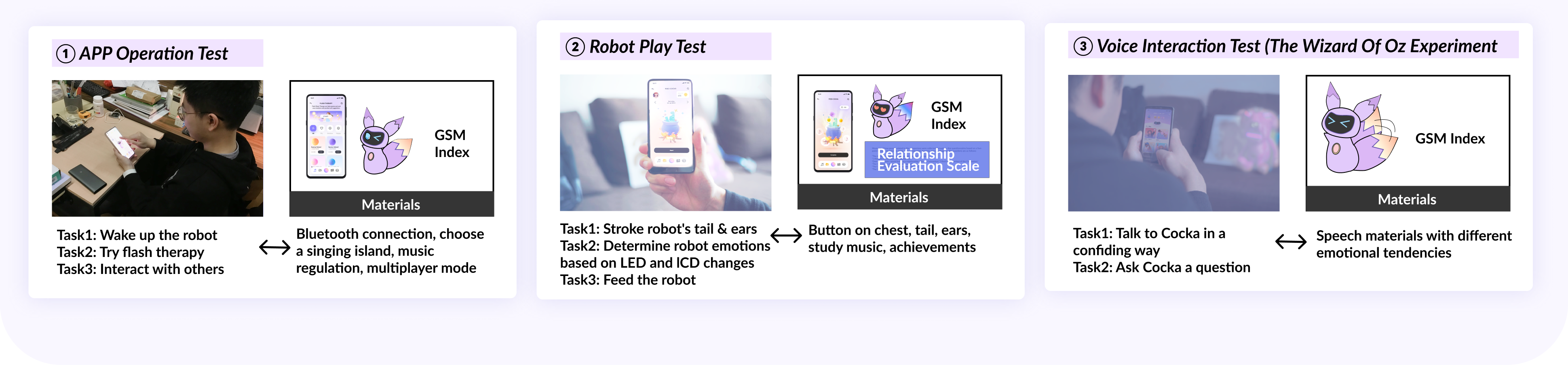
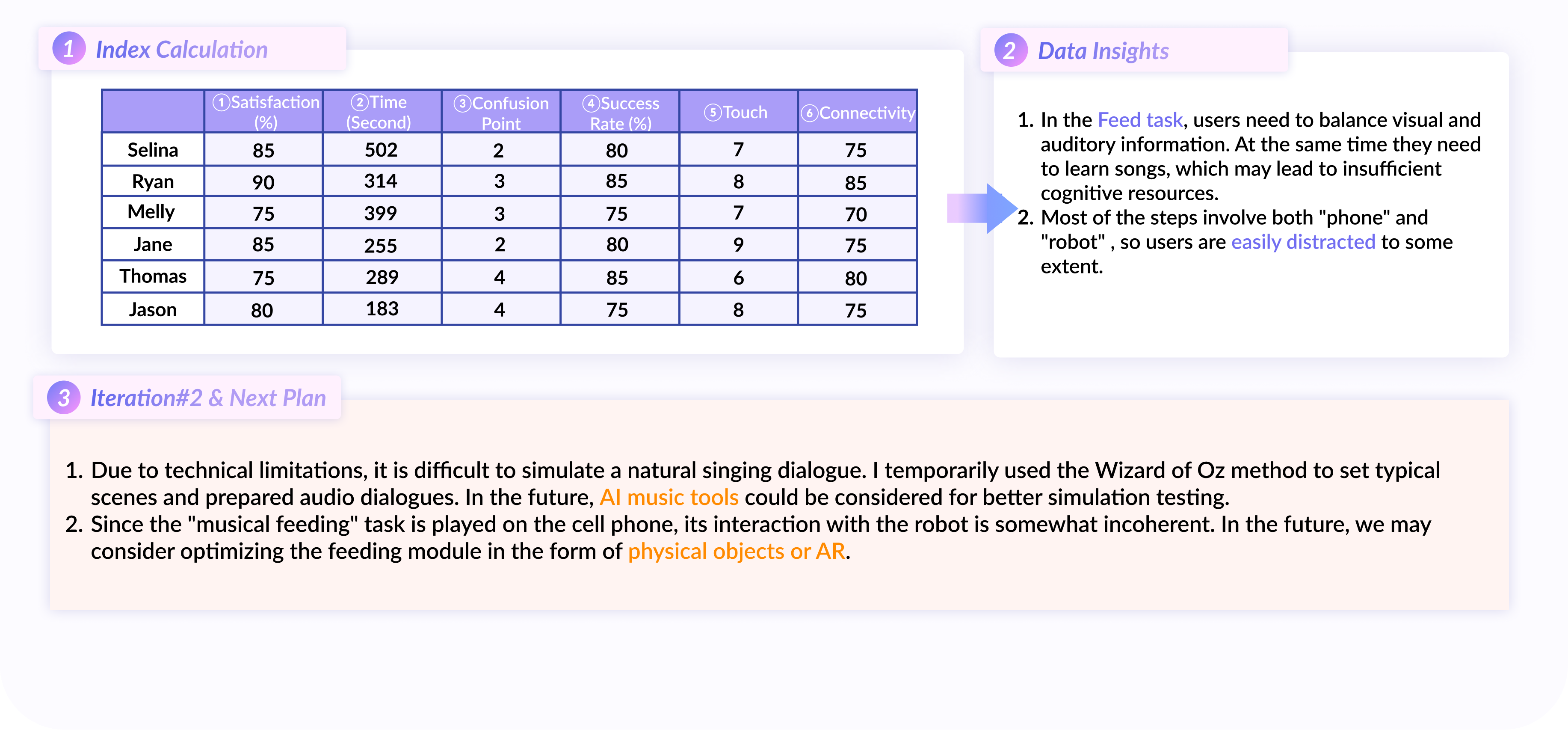
·The impact of music on people sometimes depends less on the music itself and more on the scenario. Cute robots could empower the songs.
· Users love the changing color of the tail, which reminds them of many myths and fairy tales related to foxes.