Amuself
Empower individuals with entertainment shame to transform their joys into unique AI-generated images, share them in an online gallery, and gain affirmation to overcome their shame.
AIGC
·
Media Ecology
·
Psychology
✍🏻Overview
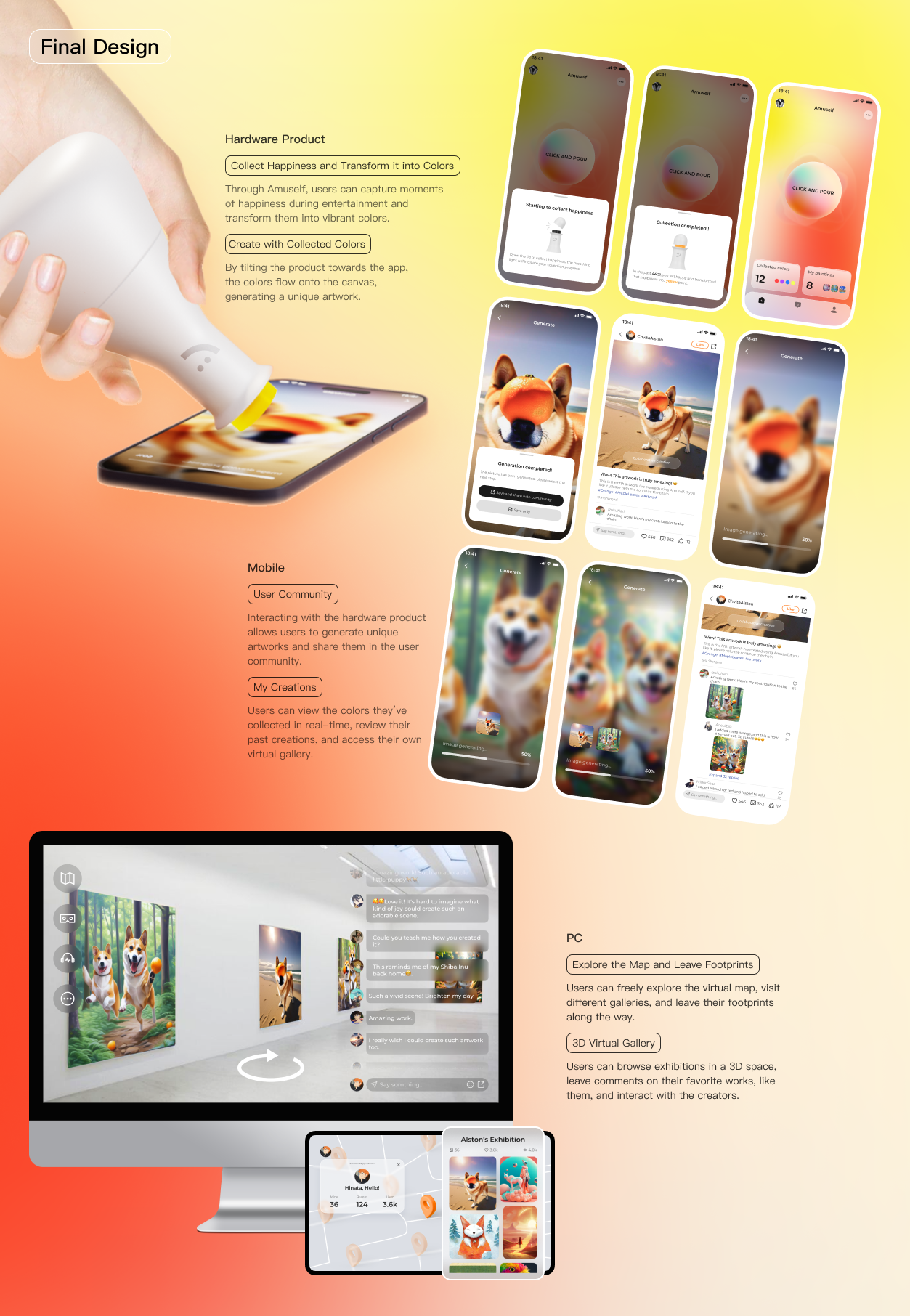
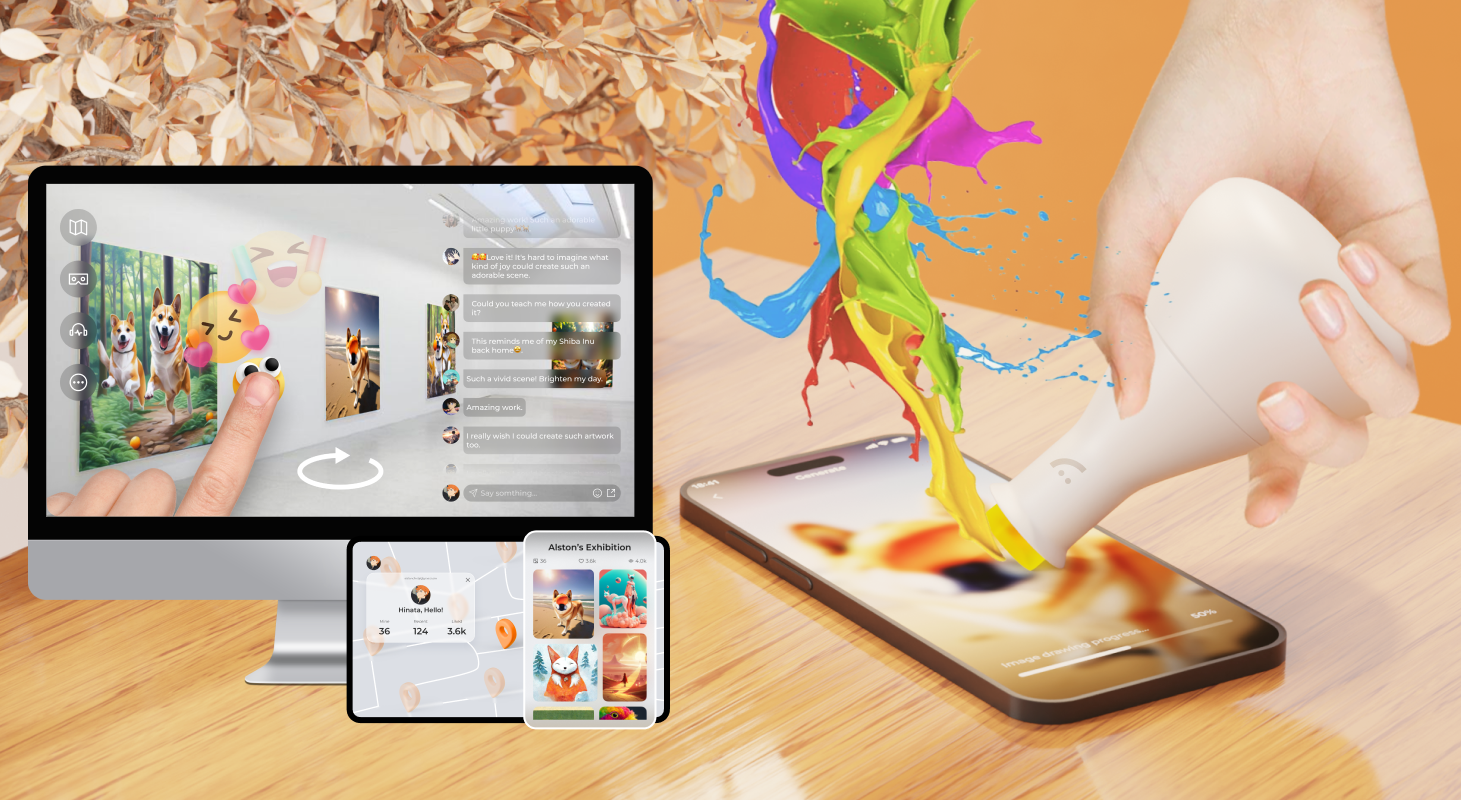
Amuself is designed to help people with entertainment shame collect their joys while entertaining, turn them into meaningful colors to generate unique images, and finally overcome the shame by sharing them.
Additionally, Amuself uses AIGC to allow the user to generate images and build an online gallery. Visitors could express their appreciation to the creator,
thereby affirming the value of entertainment to eliminate entertainment shame and experiencing a deep sense of satisfaction and accomplishment.
-
Timeline:
Oct 2023- Dec. 2024
Background
Independent Project
Tools:
Arduino, Processing, Figma, Rhino, Blender
📈Background
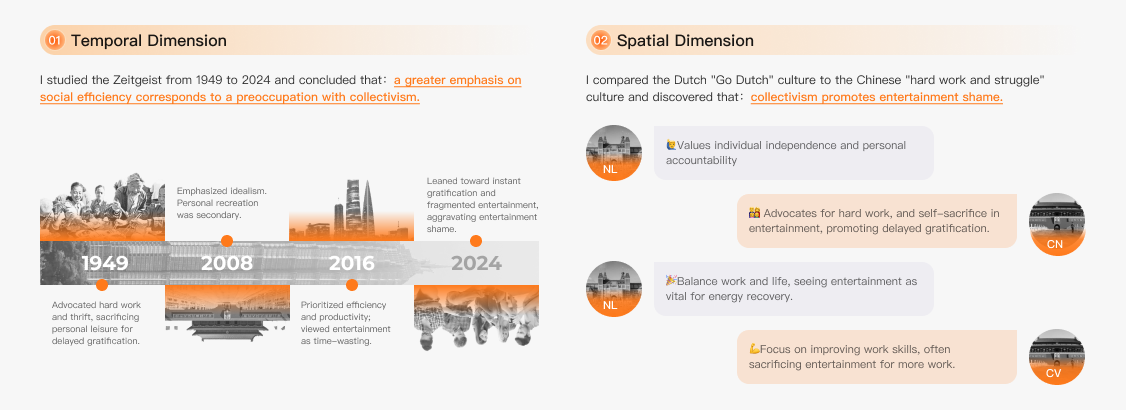
Conclusion: Entertainment shame is a psychological phenomenon deeply influenced by Chinese shame culture. It often leaves individuals feeling guilty and uneasy, even in their pursuit of leisure and enjoyment.
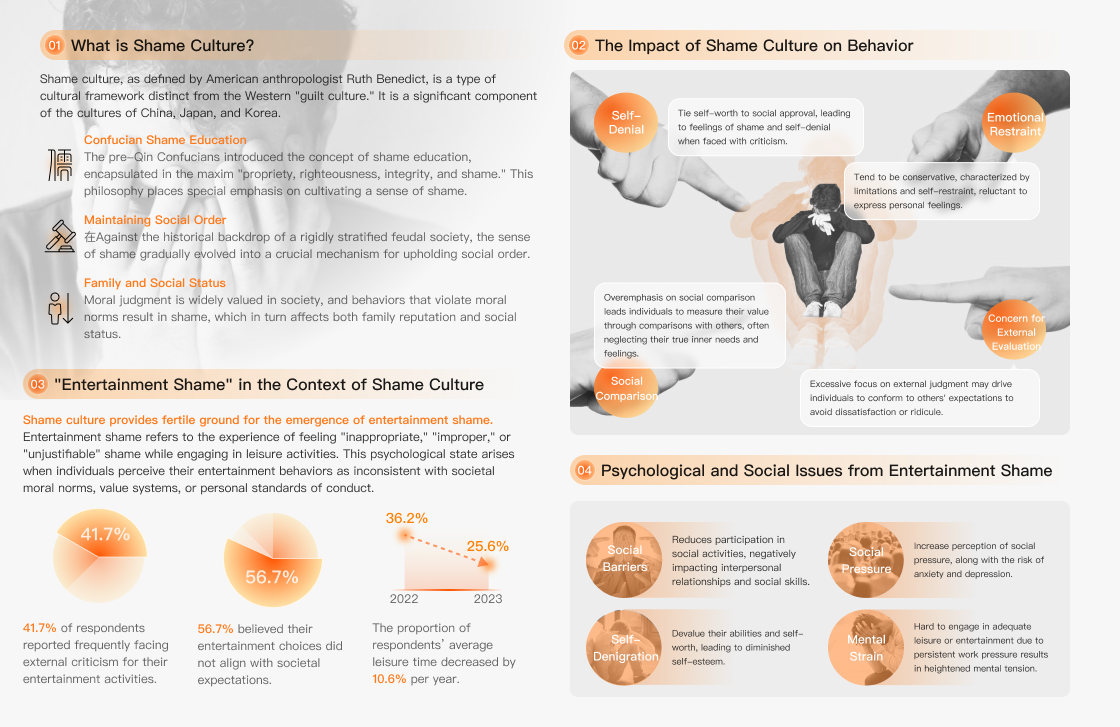
📖Desktop Research
🔍User Research
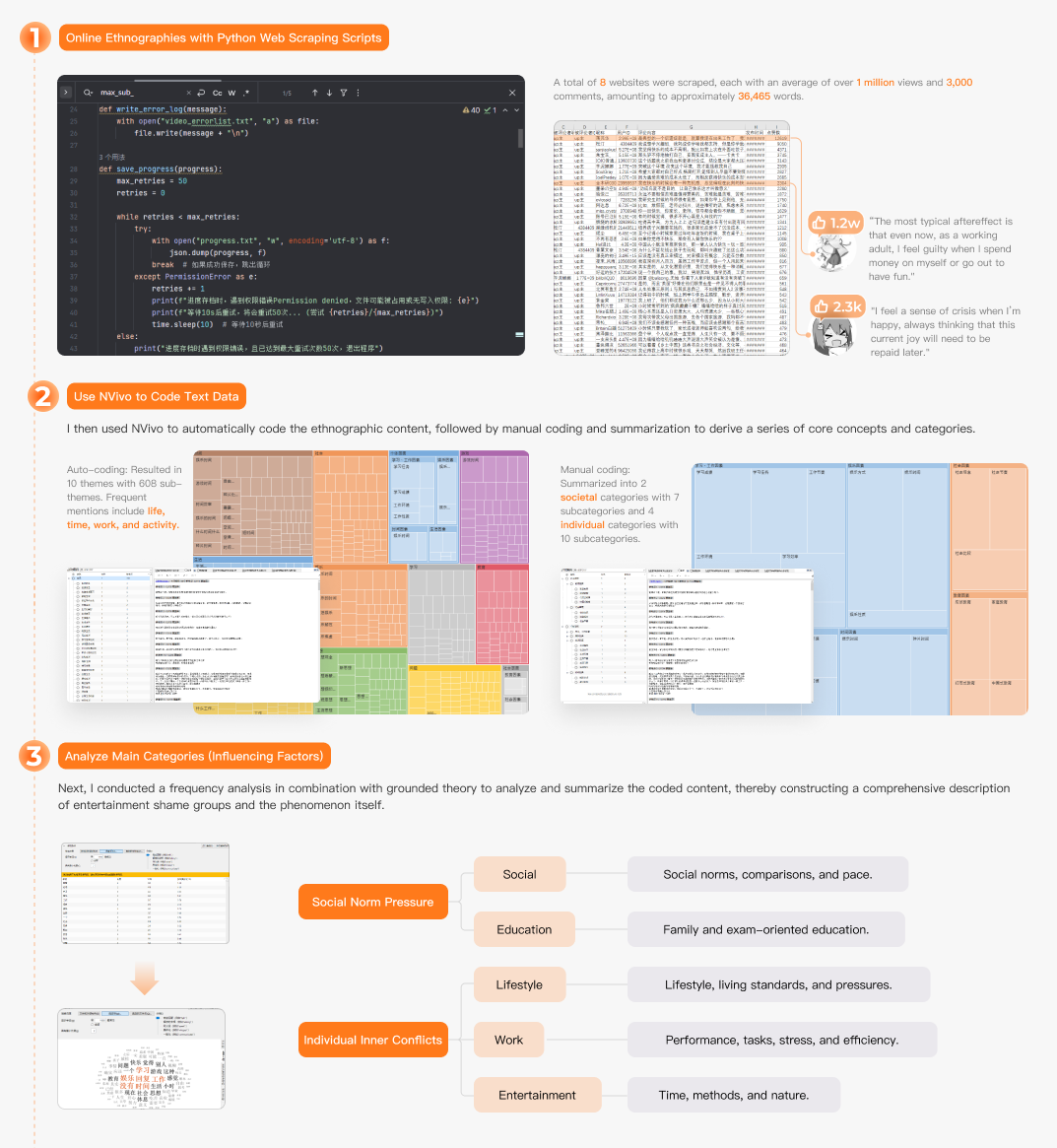
Recognizing entertainment shame as a trending online topic, I combined virtual ethnography with grounded theory, viewing the internet as my research field. Python scripts were used to gather comments from videos exceeding one million views, which were subsequently coded, analyzed, and summarized with NVivo.
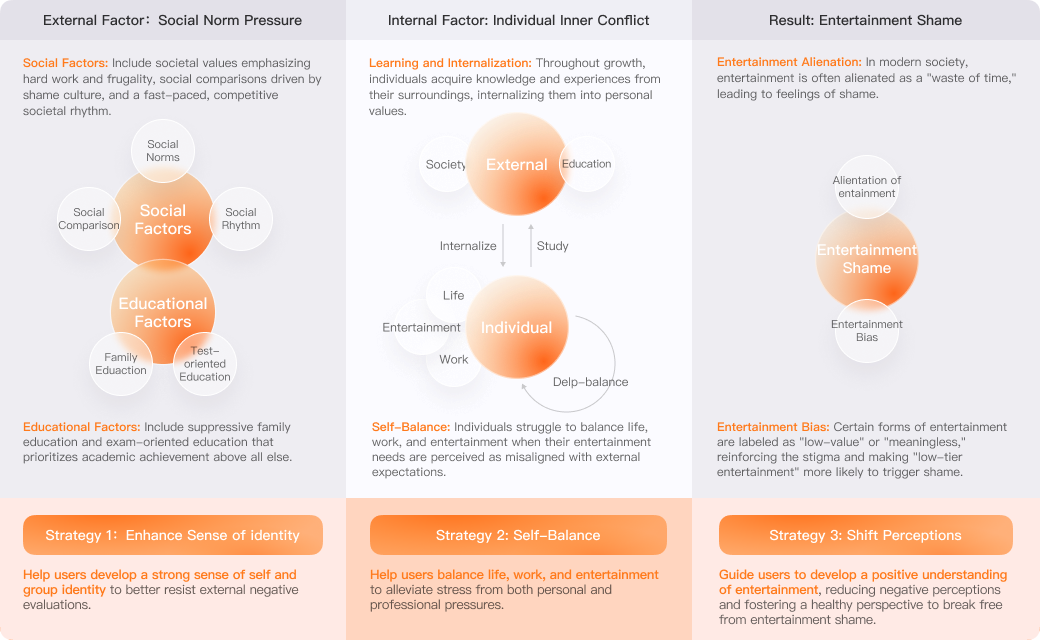
Conclusion: In modern society, people face pressures from multiple aspects of life, including work and personal obligations, while attempting to balance external expectations with their internal entertainment needs. However, this balance often conflicts with mainstream societal and educational values, leading to the dilemma of entertainment shame.
🎯Design Strategy
After thoroughly analyzing the mechanism behind the problem, I proposed 3 design strategies.
🎨Design Concept
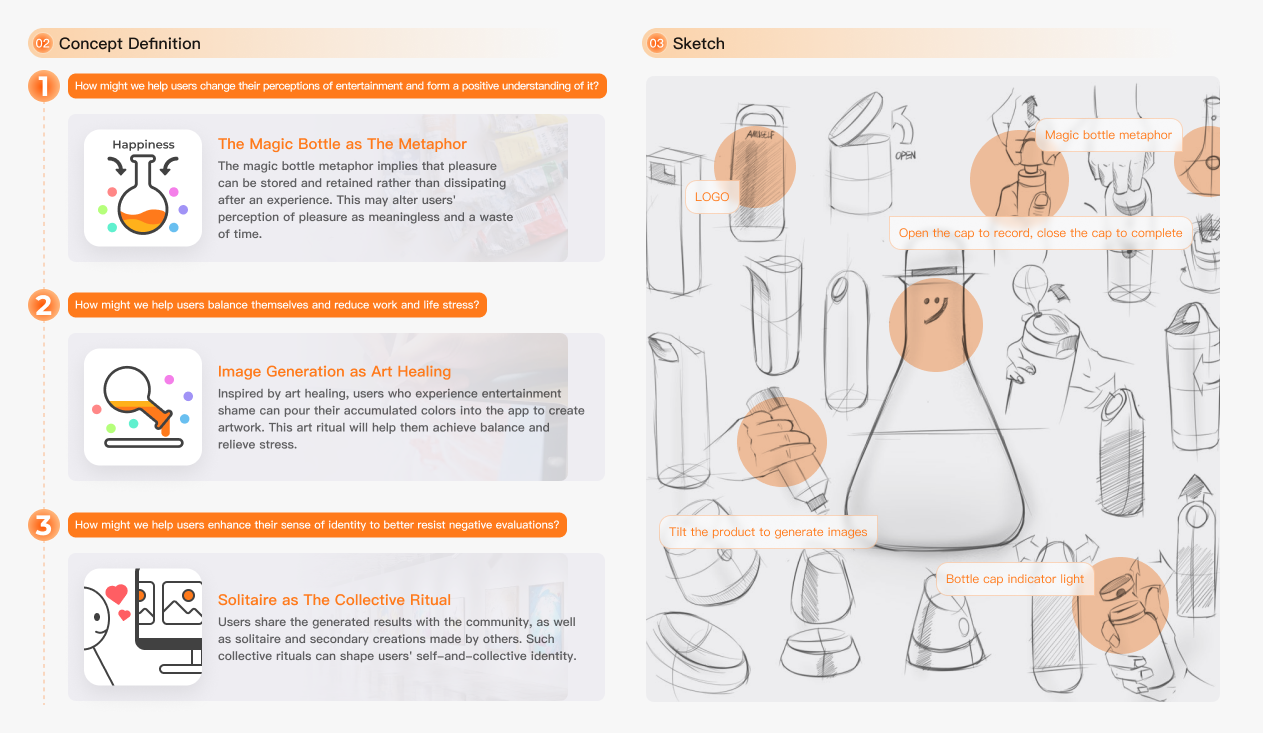
I used design strategies to define 3 HMWs, focusing on entertainment perception, life-work balance, and sense of identity. Then, I led a co-design workshop and brainstormed over 40 ideas and rated them based on enjoyment, feasibility, and creativity.
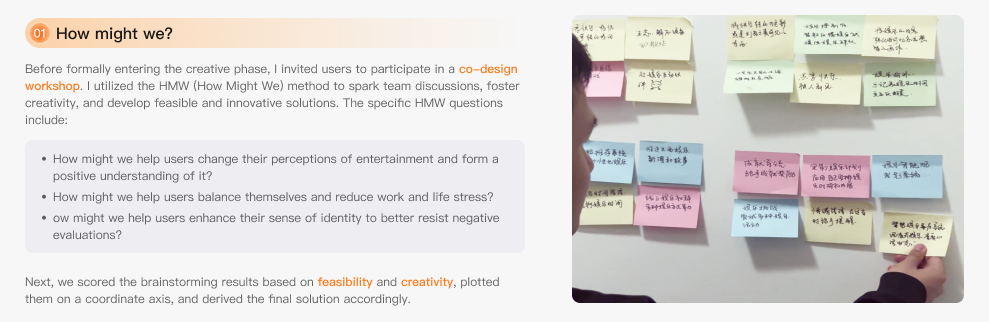
Finally, we ranked the average scores to determine the final concept:
Since metaphors shape perceptions and rituals change behavior, the design aims to transform users' perception of happiness through the metaphor of the magic bottle.
Also, it alters users' entertainment behavior through personal rituals like collecting colors and generating images, as well as collective rituals like sharing and collaborative chain activities.
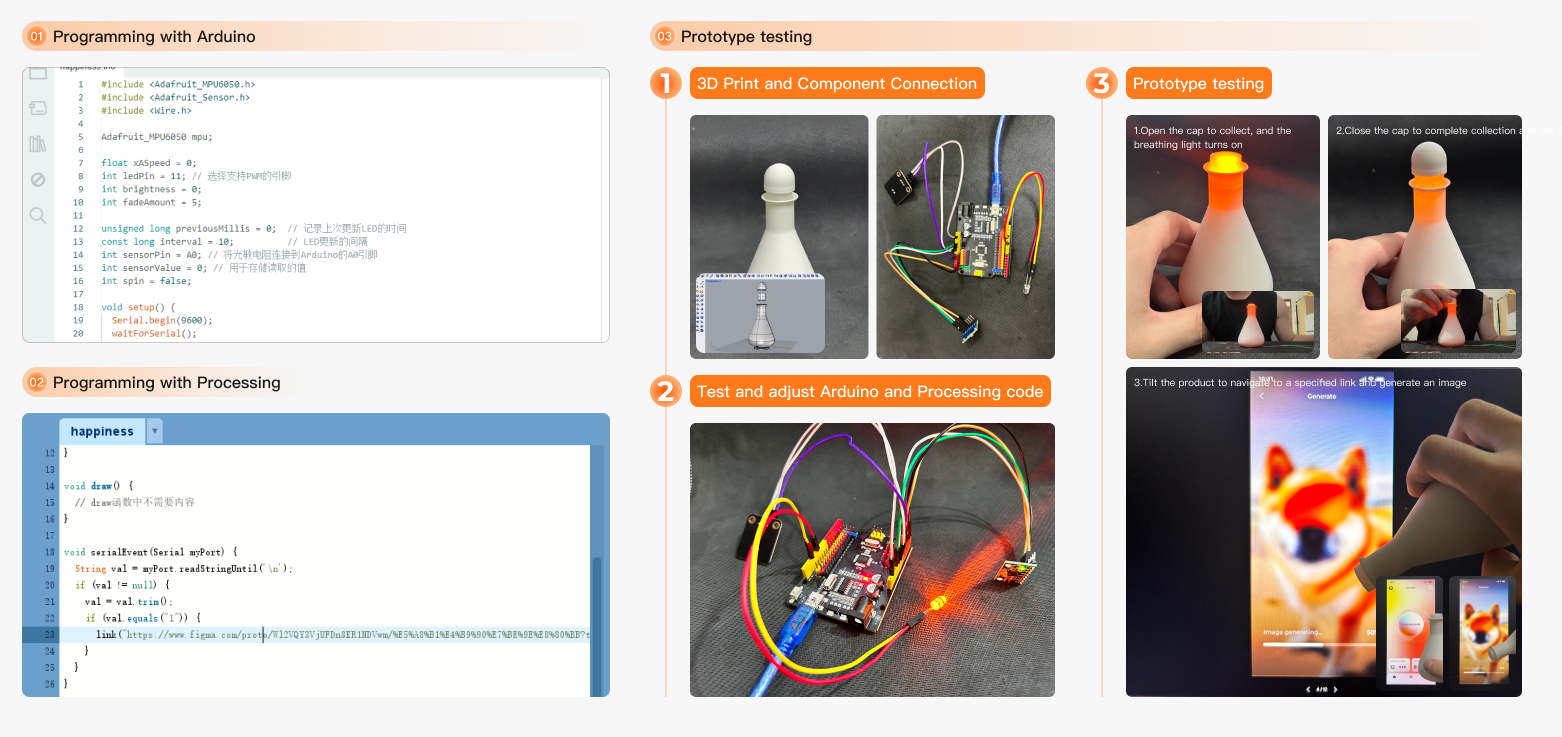
🔗Arduino Demo
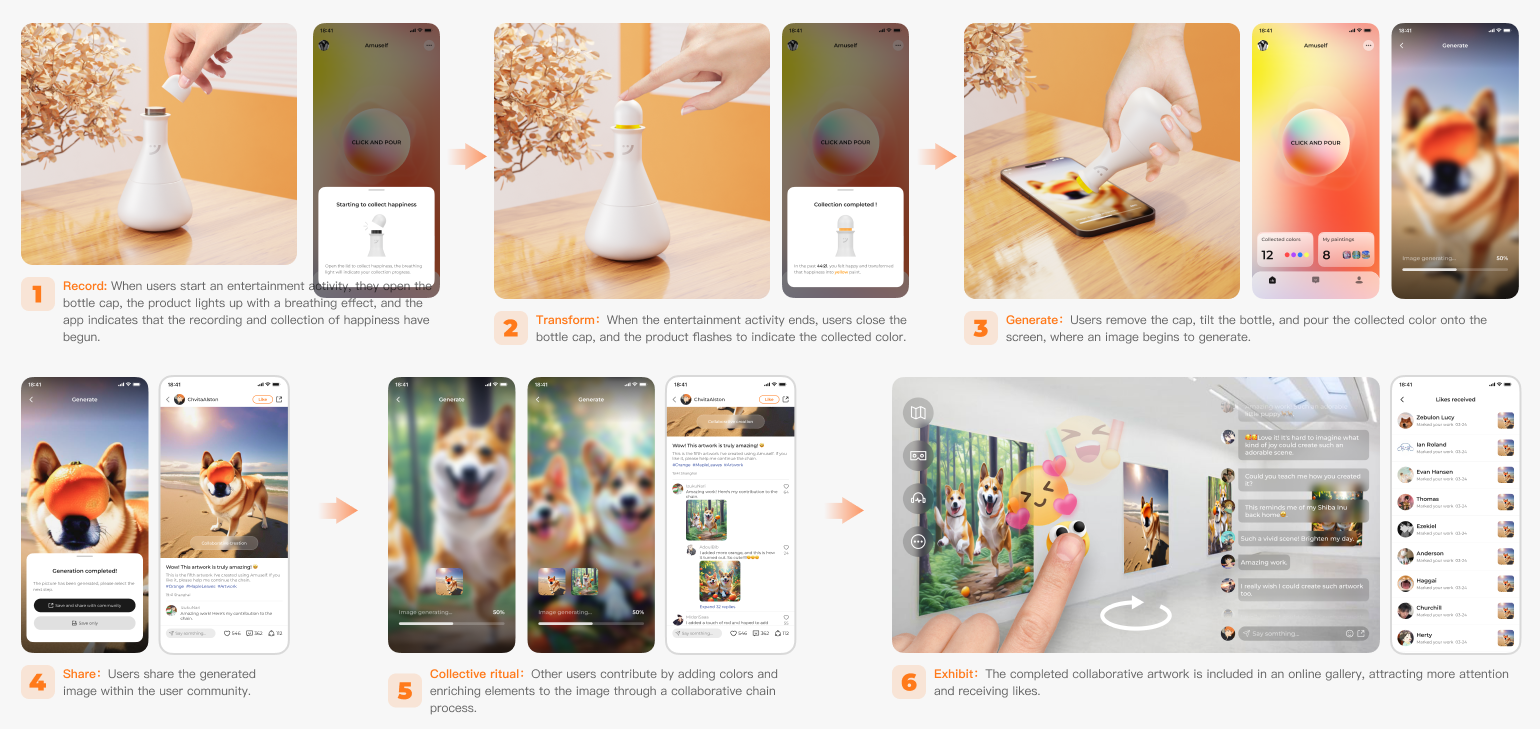
📡Interaction System
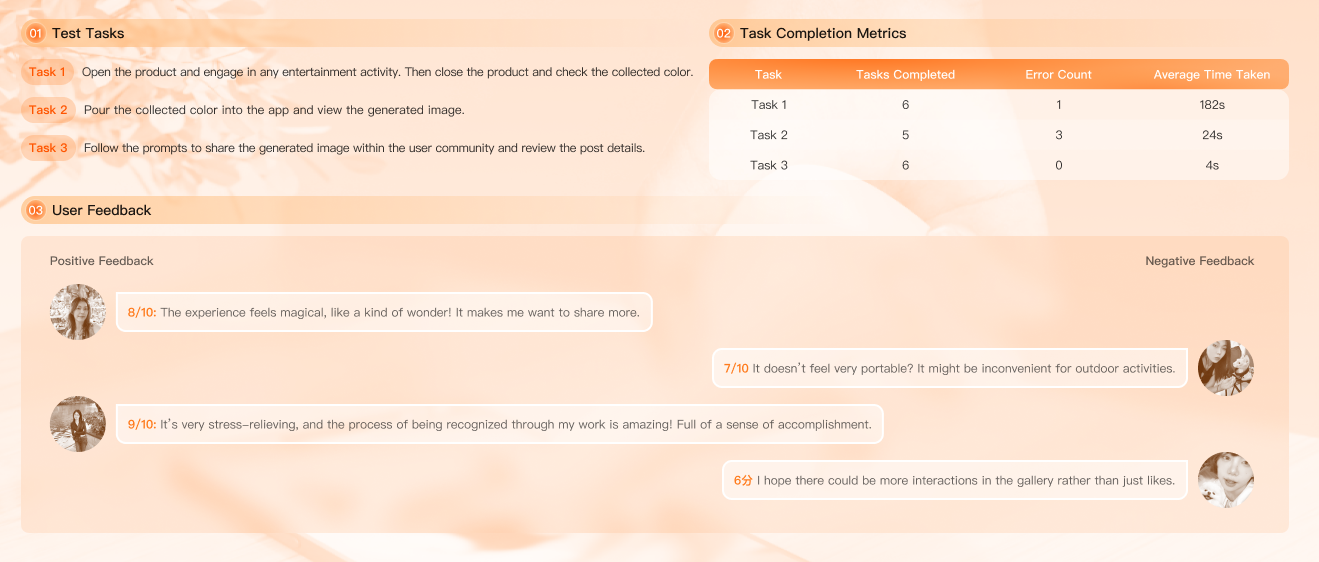
💾User Testing